We started the morning with a guided nature walk along the base of the volcano. Our guide was able to point so much wildlife that we would have missed otherwise. We saw a huge variety of birds.
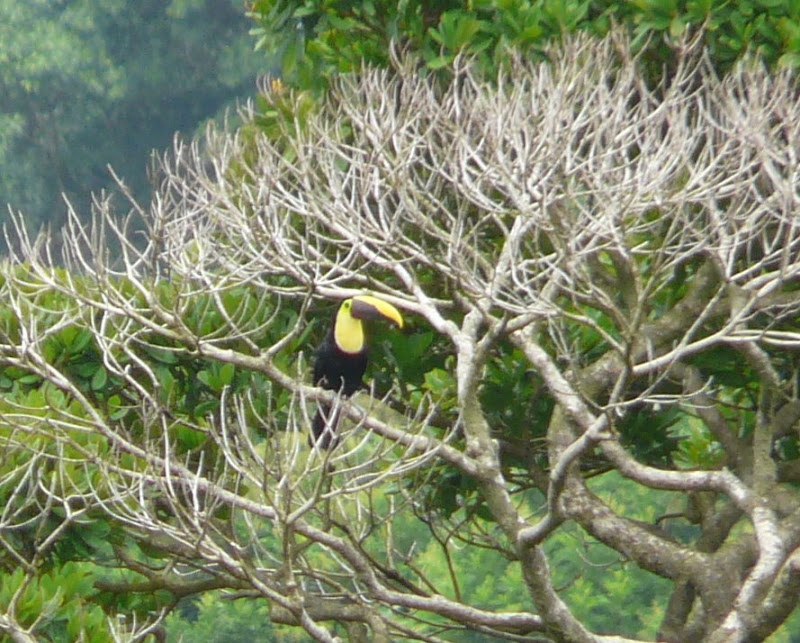
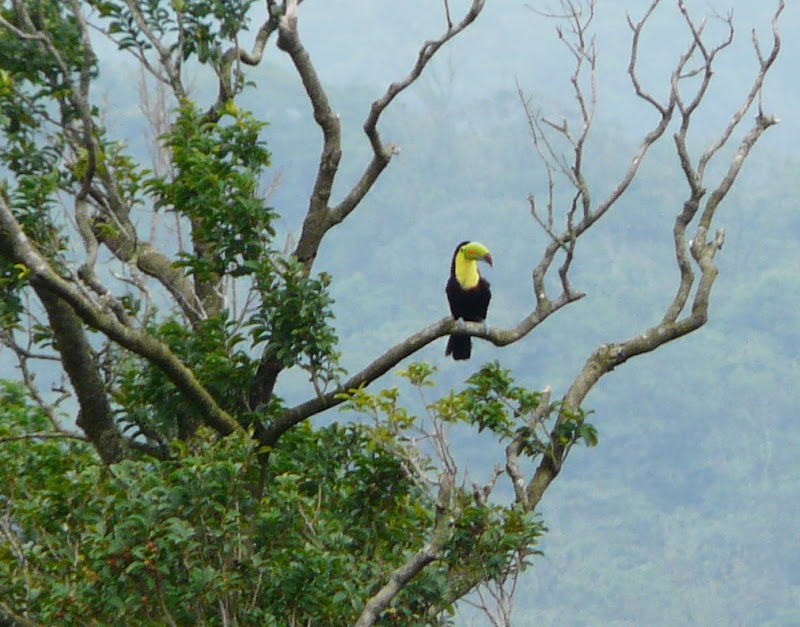
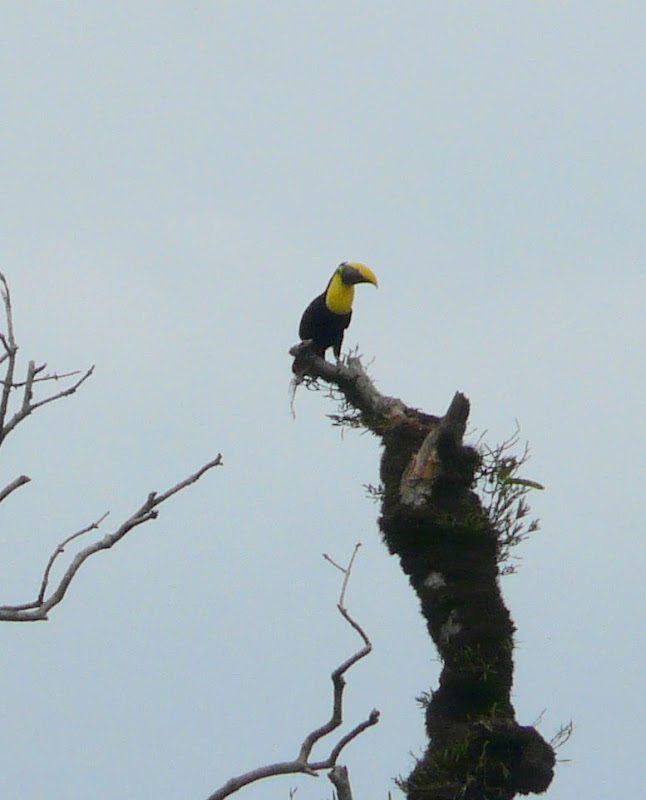
The trail went through some nice sections of old trees, but most of the old growth was removed by cattle ranchers many years ago. The cattle ranches were wiped out by the volcanoes eruption in 1968, and the land has been coming back to a natural state since then. The trail brought us to an area of an old lava flow, and we could see several species of toucans in the tree tops.
One of the birds we heard and saw was the Crested Guan, which the natives used to eat like turkeys according to our guide. The videos here have the sound of the bird in the first clip, and then a picture of the bird in the second clip. (I took a video of the bird when I wanted to take a picture.)
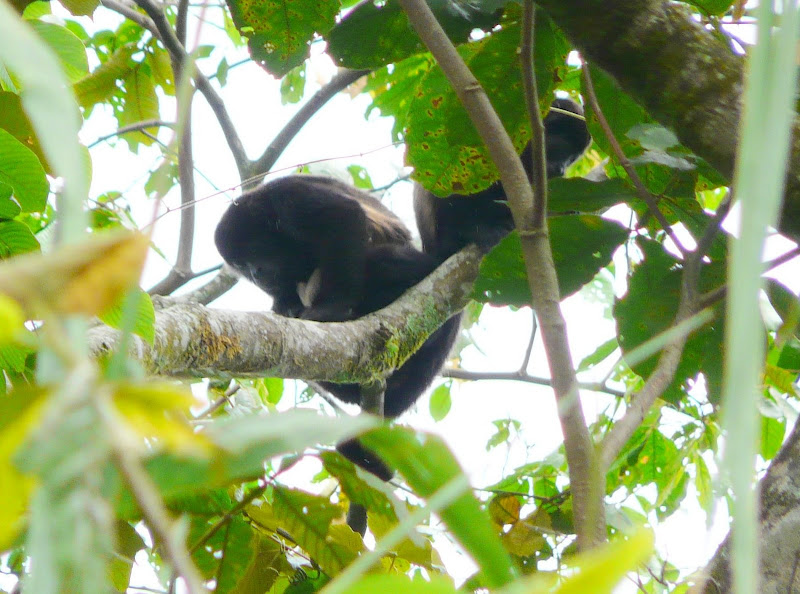
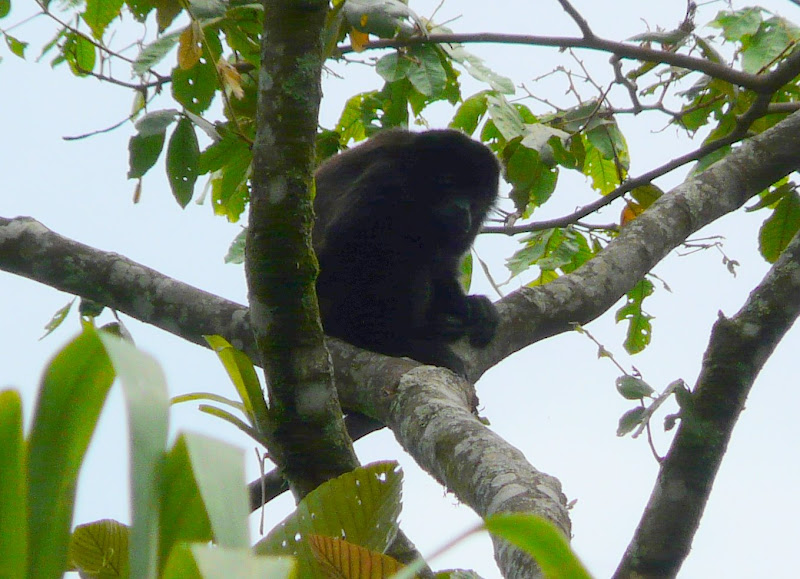
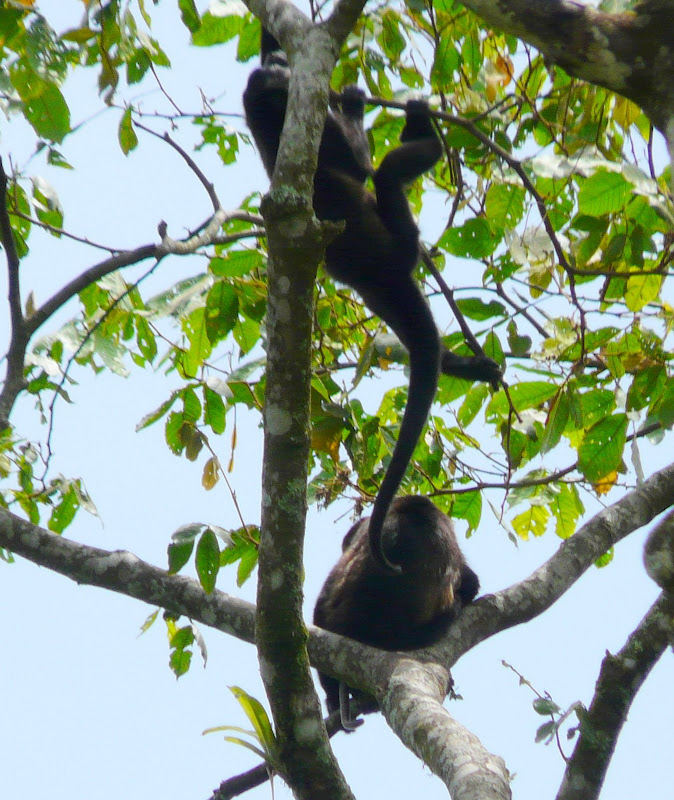
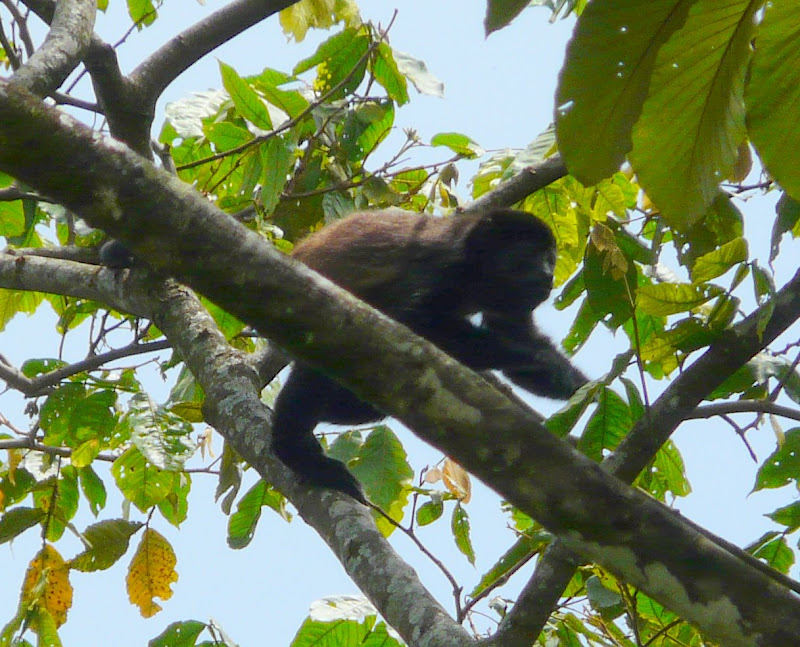
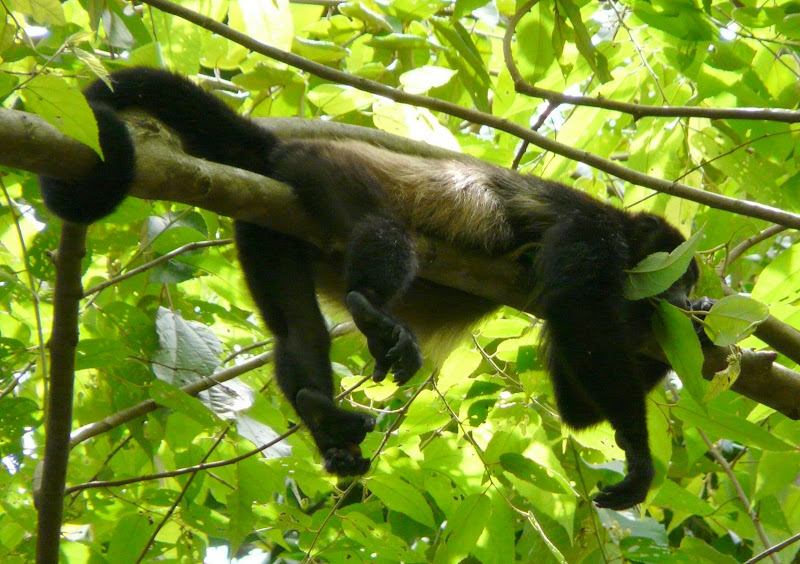
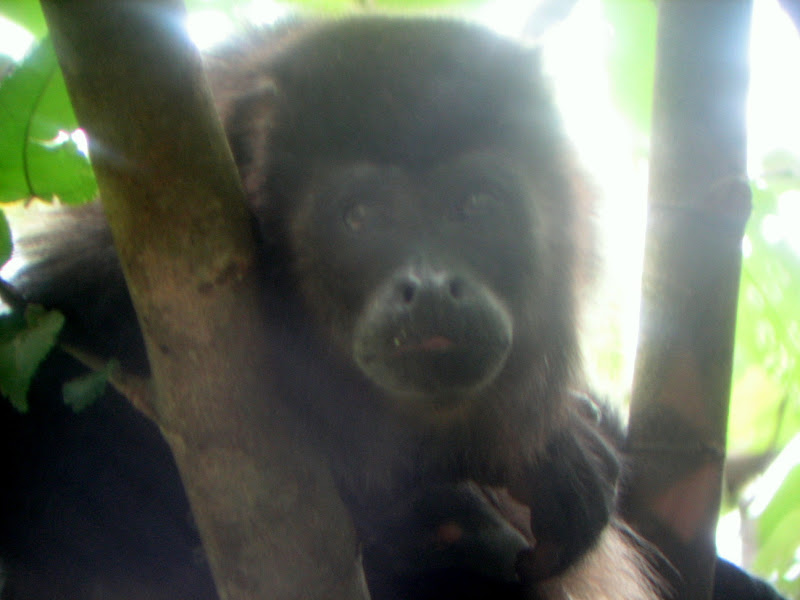
We were hoping to see monkeys, but we came across none there. But on our way back, our guide showed us a group of howler monkeys who lived along the road not far from our hotel.
After our hike, we started on the road to head to Santa Elana, the gateway to the Monteverde Cloud Forest. It was quite close as the crow flies, but a long drive through the mountains by road by car. We stopped in Nuevo Arenal for a long lunch. It would have been a quick lunch but the service was less than rapid. The food was great, so no complaints. Nuevo Arenal is a nice place, like being in Switzerland. A clean town on the banks of a mountain-lined lake. As we headed into the mountains south of Lake Arenal, the road became progressively dicier. Heavy rains were coming down intermittently as well. We would find ourselves crawling along behind a truck along tortuous mountain roads that were rocky, rutted, and bone-shaking. It seemed to take forever to arrive at Santa Elena, and the closer we got, the heavier the rain came down.
We finally got there, got a room, and contemplated what we could do in the rain. The hotel keeper recommended the ranarium - a frog conservatory. We got there just around sunset. Since frogs are mainly nocturnal, this was a good thing. On the other hand, since they did not allow flash photography, this was a bad thing. It was difficult to get a picture that didn't come out blurry. The star of the show is the red-eyed tree frog.
Santa Elena was crawling with people. It was a little jarring after the tranquility we had the previous 3 nights. To make matters worse, the people in the room next door came back and started laughing and partying right after we went to bed, which put me in the uncomfortable position of having to knock on their door and ask them to keep it down. What a drag.
The people next door who partied all night left at five, and we got to listen to their squeaky door go back and forth and back and forth in the early morning. Man, did we pick the wrong hotel.
The morning was cloudy but thankfully dry. We stopped and got the local bakery's version of a ham and cheese croissants with a couple coffees and hit the road for the Monteverde preserve. We took a guided tour, featuring Ian, whose running joke over the last ten years is apparently that it is his first day of work.
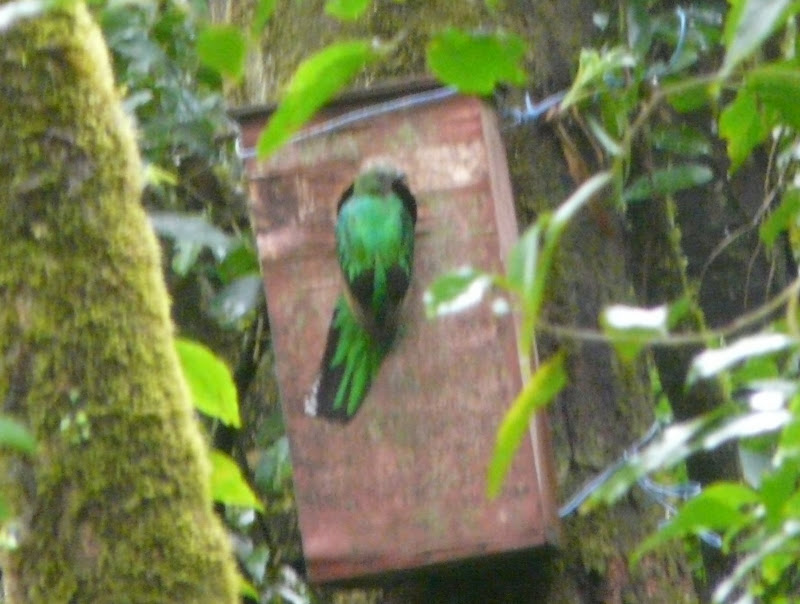
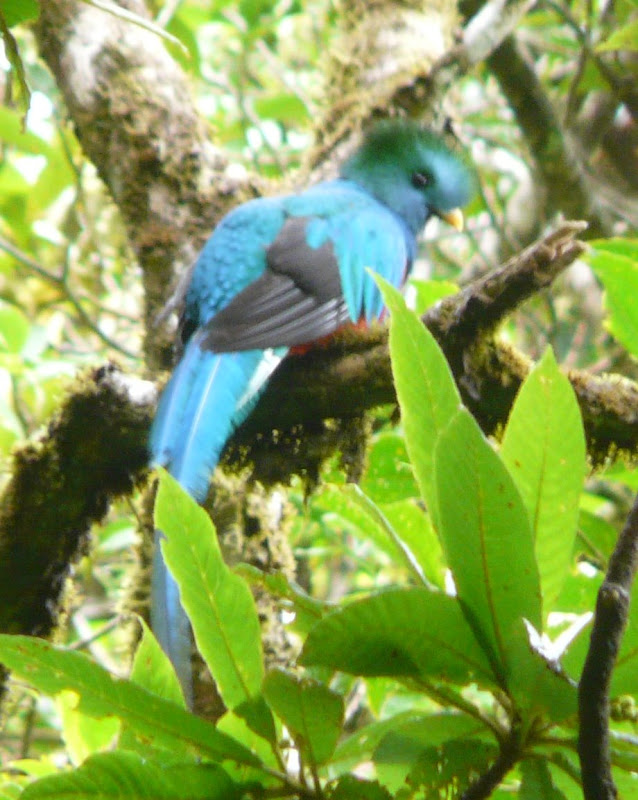
There are quetzal nesting boxes that have been built in the park, and we stopped and watched a female quetzal coming and going from one of them. A male quetzal should have been nearby too, but we saw none.
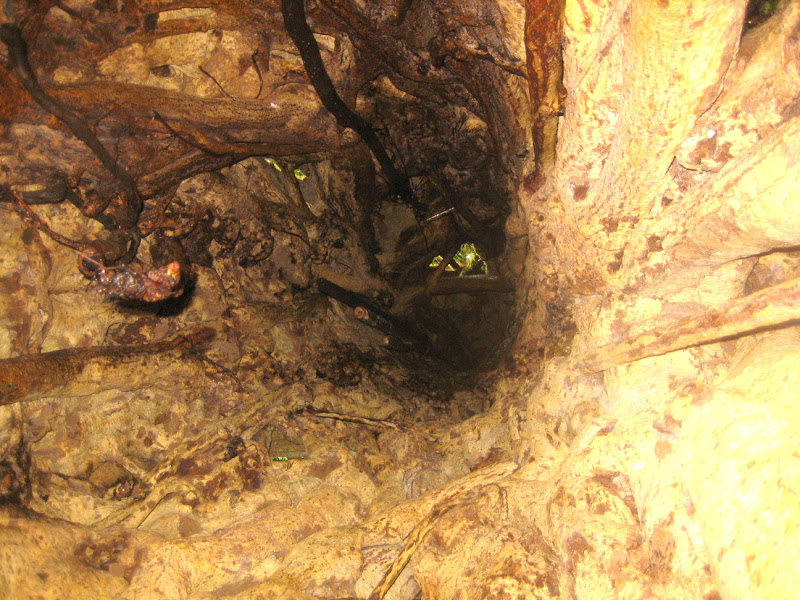
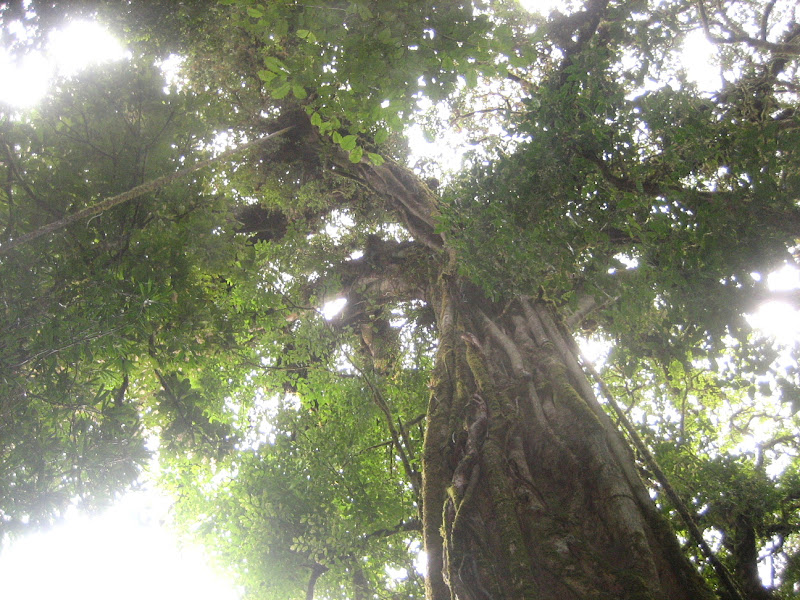
Farther down the trail, Ian borrowed our camera and stuck it inside a hollow tree, snapped a picture, and then showed the people on the tour the screen. The tree was covered by a strangler fig, the inside of the tree has disappeared, and the strangler fig took over.
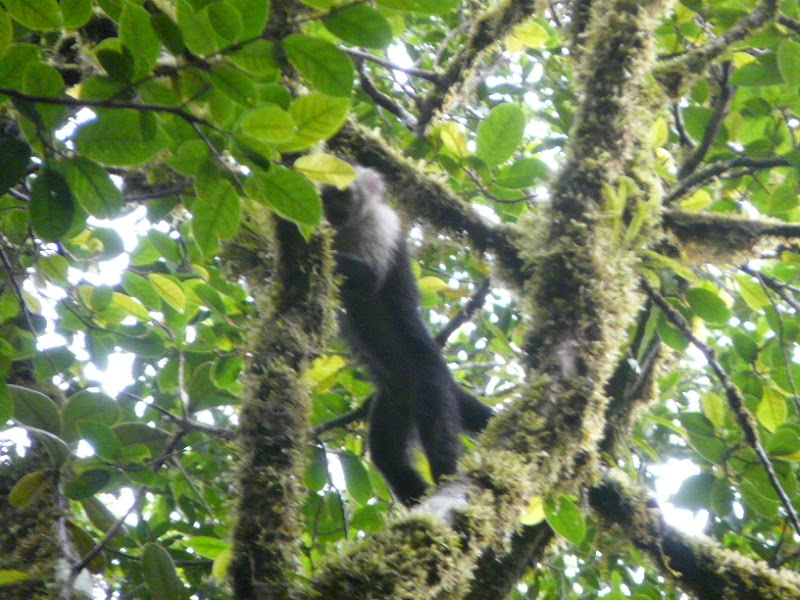
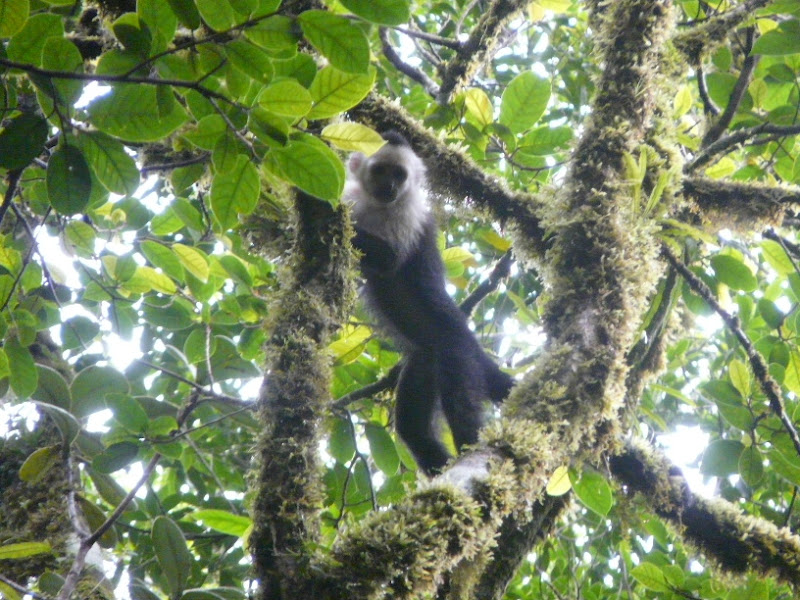
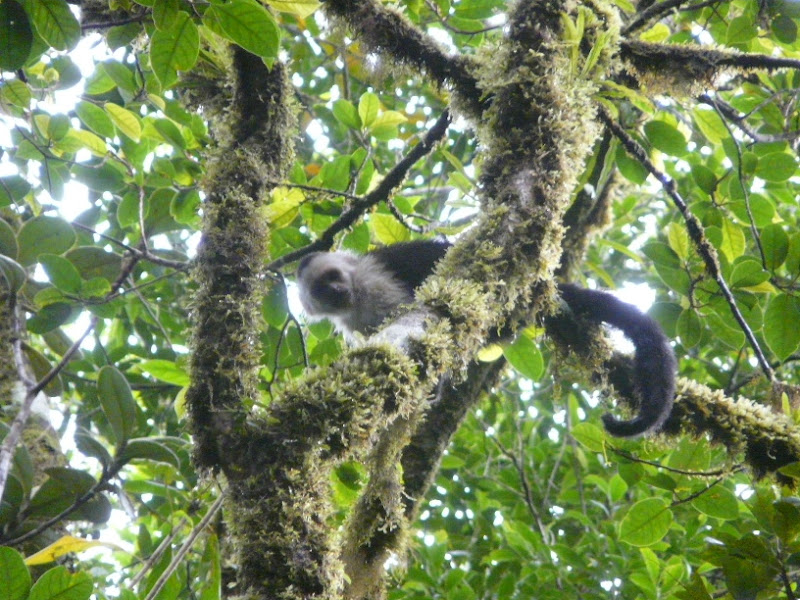
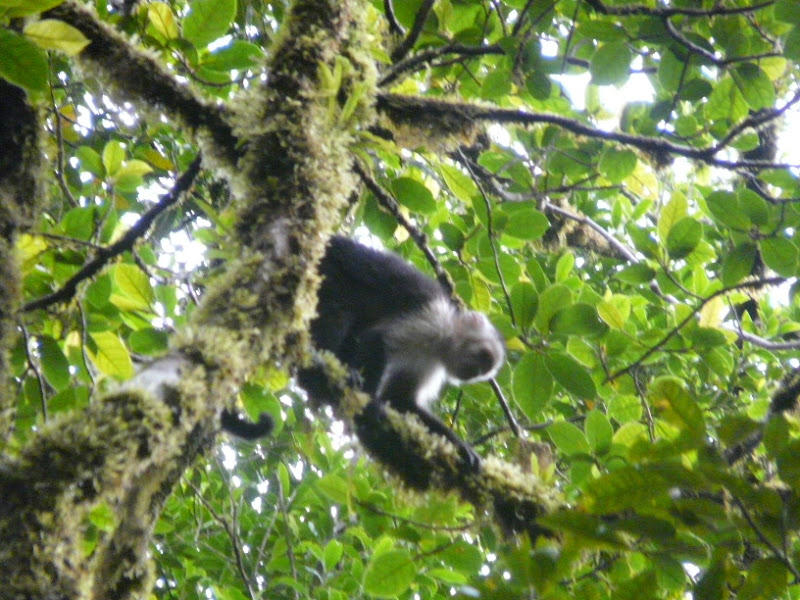
A few minutes later, we came across a band of white-faced (capuchin) monkeys.
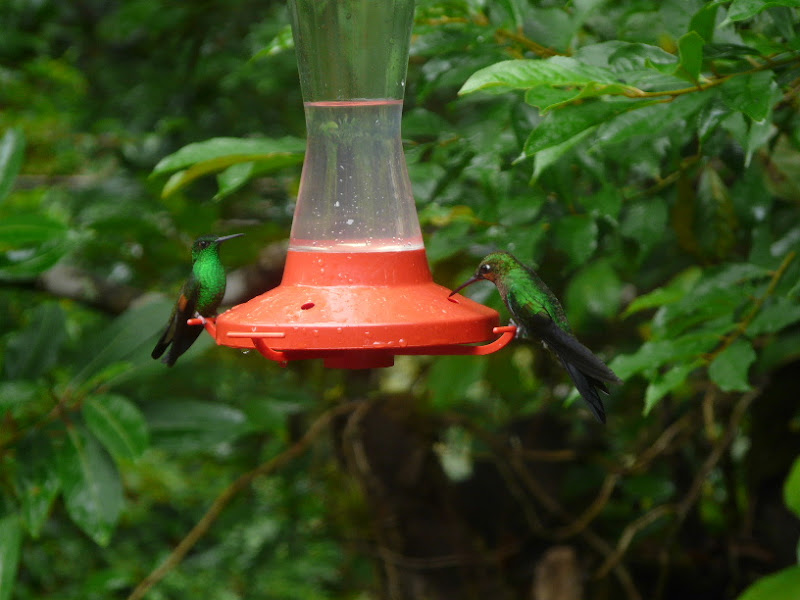
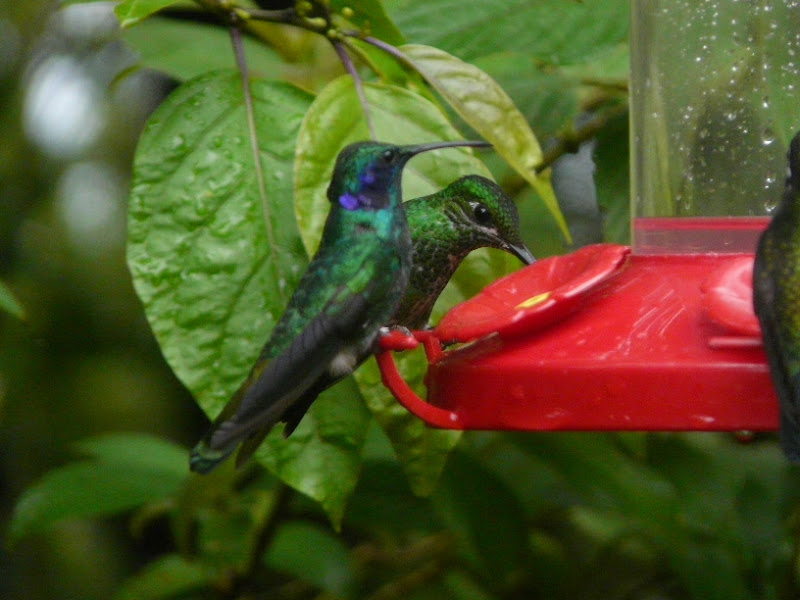
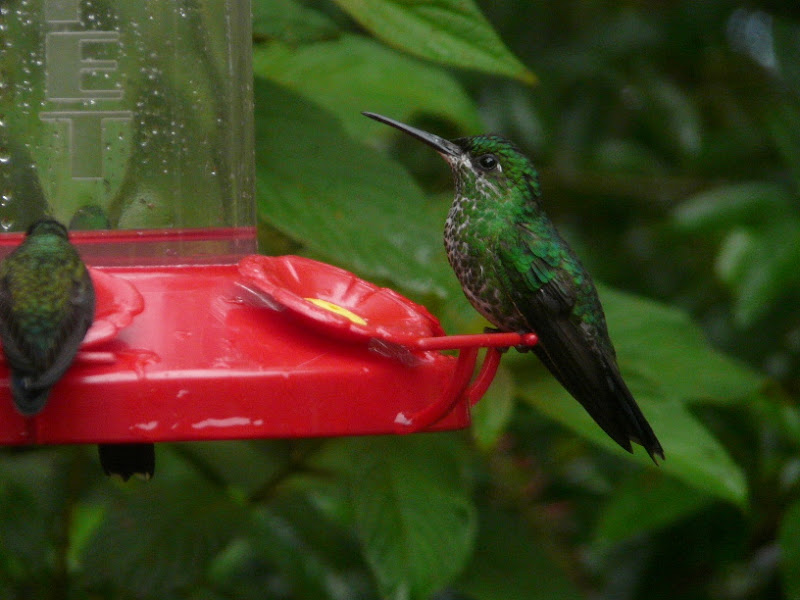
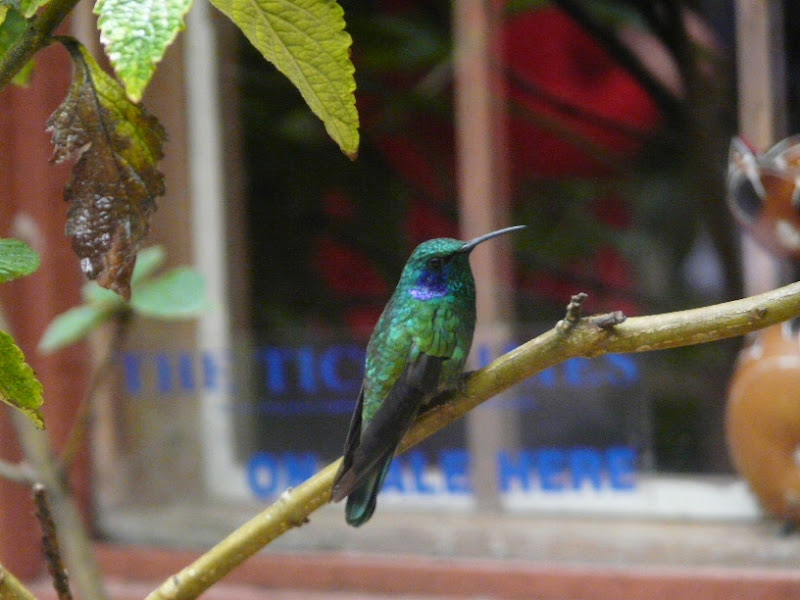
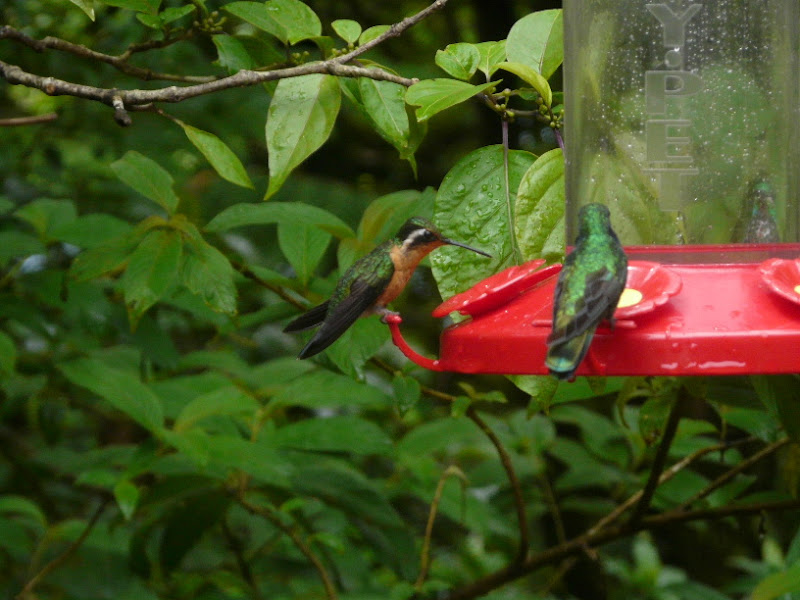
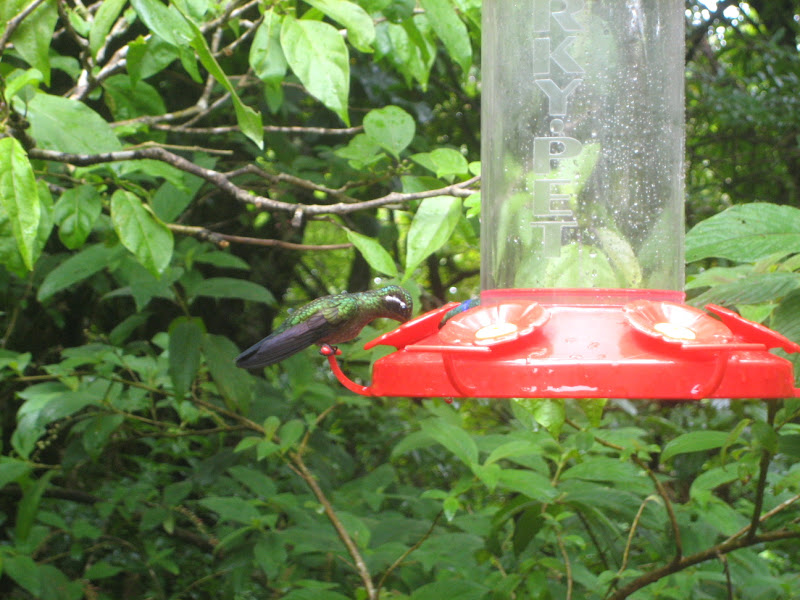
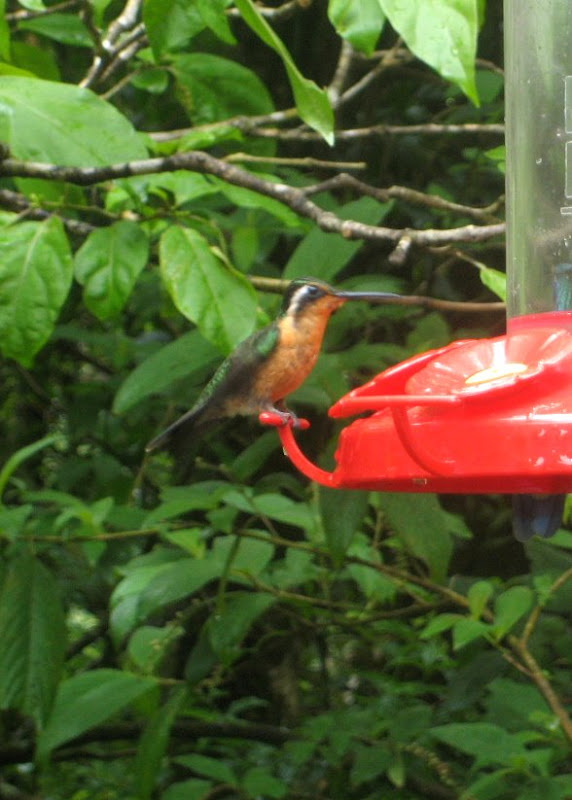
After the tour we visited the hummingbird garden, where there are something like seven species of hummingbirds, albeit at standard hummingbird feeders.
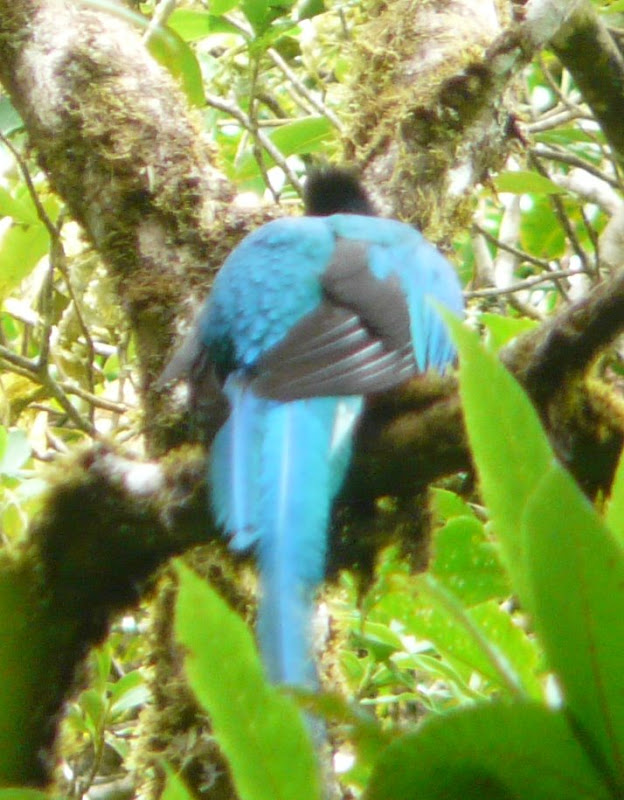
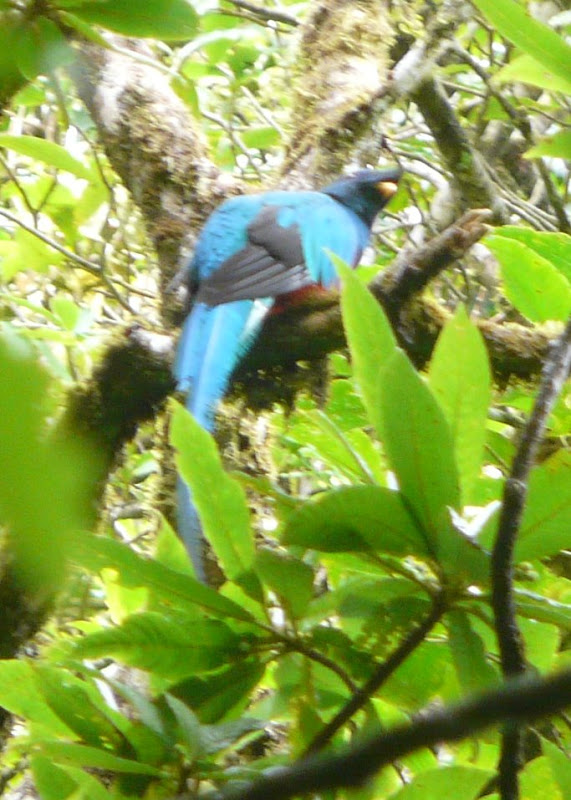
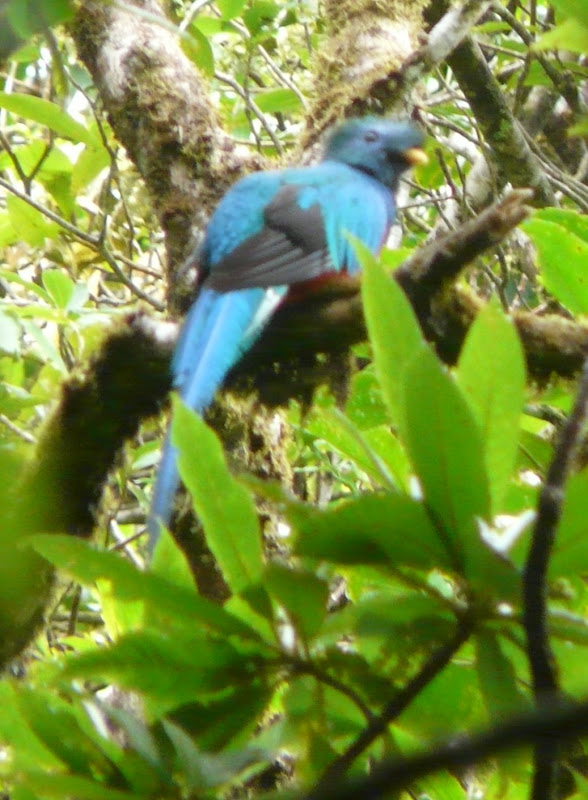
While we were there, one of the guides ran by and alerted everyone that there was a male quetzal in a tree right by there. Wow! These birds are so big and just as bright as can be.
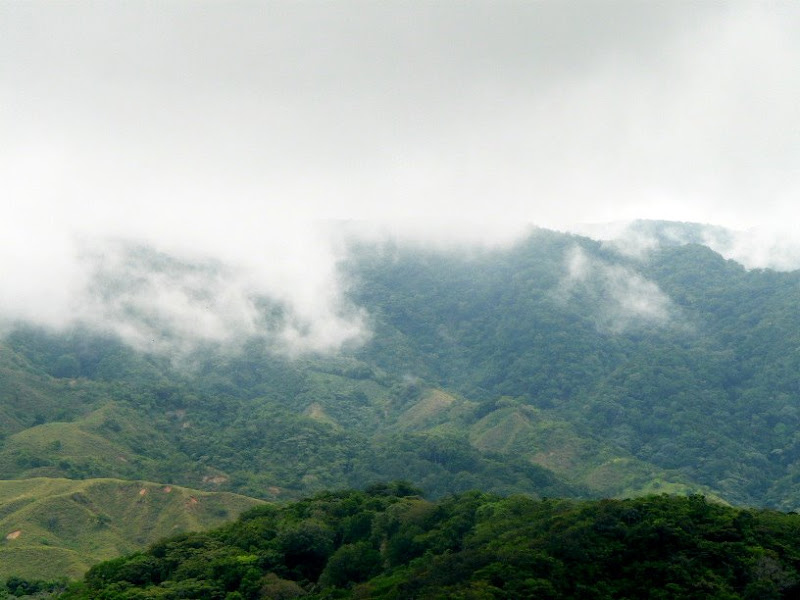
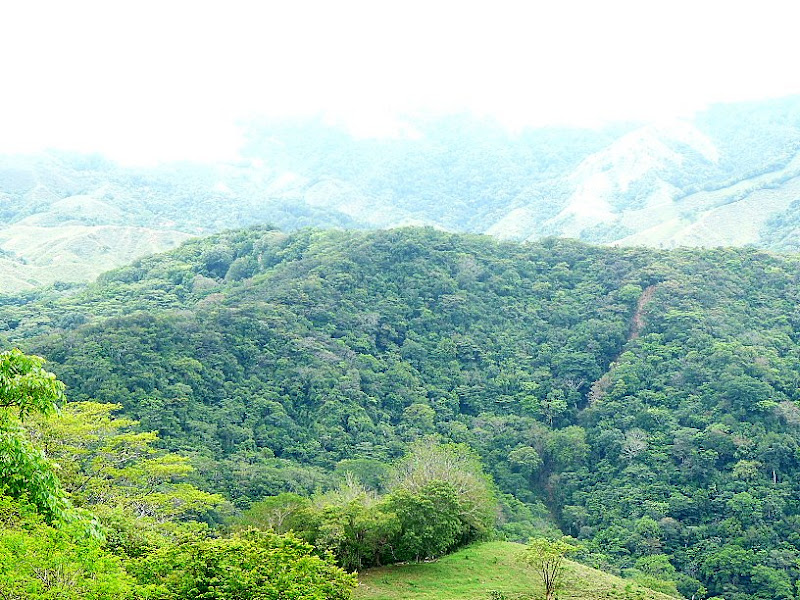
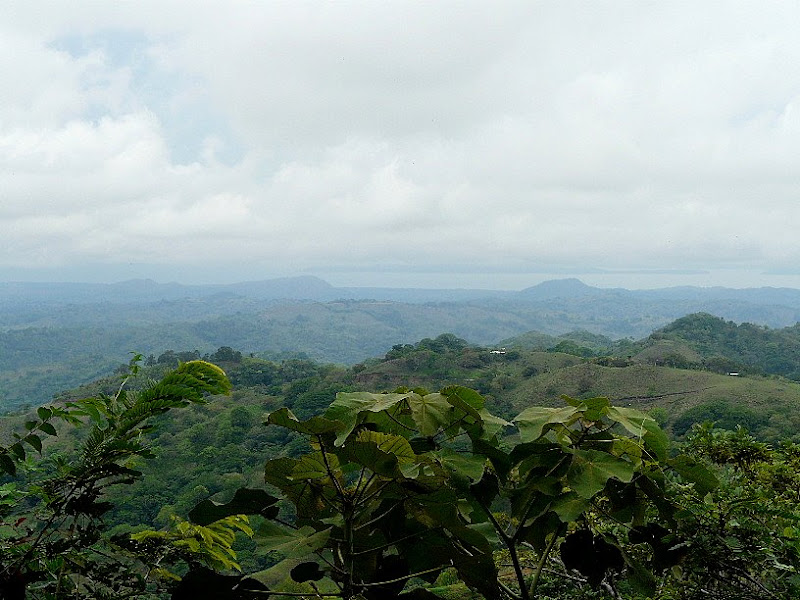
It was about 11am, and we did not want to get to Manuel Antonio too late. We set out on our way, and we found the road taking us toward the Pacific Coast was infinitely better than the one we had come on. The scenery was majestic. The mountains had a shroud of clouds, with an uninterrupted forest below. At least for a while. Humans have made their mark on the land, but not too heavily.
The road twisted through the mountains, and eventually descended toward the Pan-American Highway. After endless stretches of backroads, we were thrilled to be on pavement again. This thrill lasted for about 5 miles, when all traffic came to a standstill. If you are not aware, the Pan-American highway is the only road linking all the countries of Central America, the primary artery of all commerce. And it is a two lane highway, not a passing lane anywhere. We sat stopped, and after about 15 minutes we started to see traffic coming from the other direction. And then nothing. And then a few more trucks and cars. And more of nothing. And we waited and waited and waited. We all moved forward about 500 meters, a quarter mile. And we waited again. And then, one hour later we were through the intersection that was under construction. And we saw the line of cars from the other direction was probably four times longer than ours. This is how traffic works in Costa Rica.
From there, we had wonderful highways. It was a joy not to have our spine re-arranged every minute, such as we had been going through on the roads up to then.
However, in order to get to Manuel Antonio, you have to cross two one-lane bridges. And they appeared to have no traffic control. Traffic on one side waited until all the traffic on the other side cleared. This means it would pretty much take forever to get across, since traffic would back up on one side far enough that it would never have a break. Our guide in Manuel Antonio told us the locals have given these two bridges names.
First, you get to the "Forever Bridge". After you cross that , you reach the "Oh My God Bridge". The Oh My God had the added attraction that planks on it would randomly fally off, causing traffic to halt until someone went below the bridge and brought the plank back. Or at least so said our guide, and I would not doubt his veracity or capacity for story-telling. Our crossing of the Oh My God bridge was further spiced up by the car that stalled on the bridge right before we got to it, so I had to get out and help push his car before the rest of us could cross.
So oh my God, it took forever, but we finally got to Manuel Antonio late in the afteroon as a light rain started falling. I had seen a posting on the Guide du Routard's forum that there was a little old grandmother with a grocery store on a back road who had really nice room for $25, and it was just as promised. And after we got set up in our room, it started to rain a little harder. We contemplated whether to walk to the restaurant three blocks away or take the car and stay dry.
We walked. The rain let up a bit, so we didn't regret it. Manuel Antonio is essentially a town that has about 1 mile of beach, and about a 1/2 mile of businesses on the road across from the beach. On the north end is the mountain highway to Quepos, and the south end is the entrance to Manuel Antonio National Park.
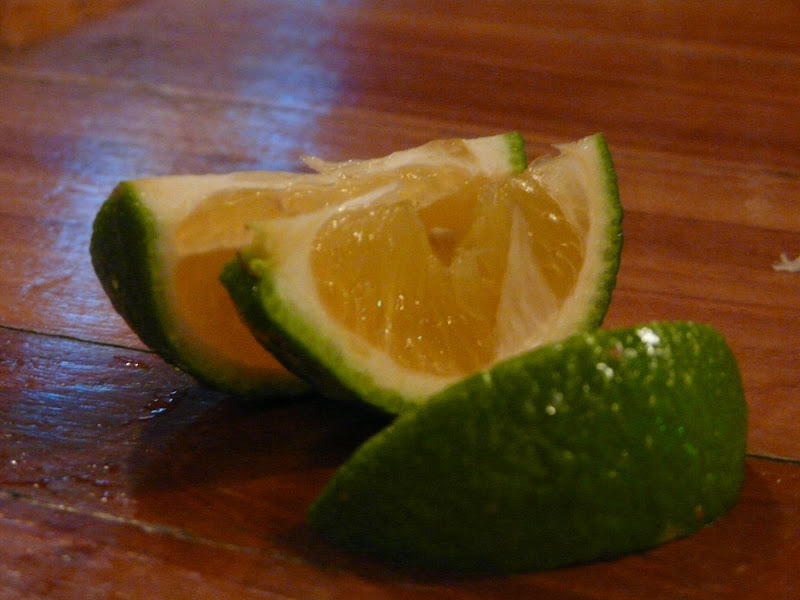
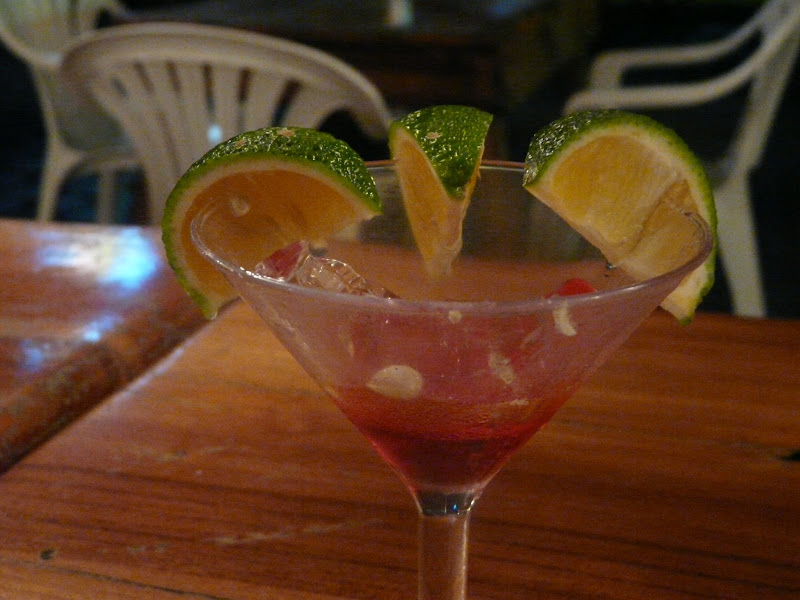
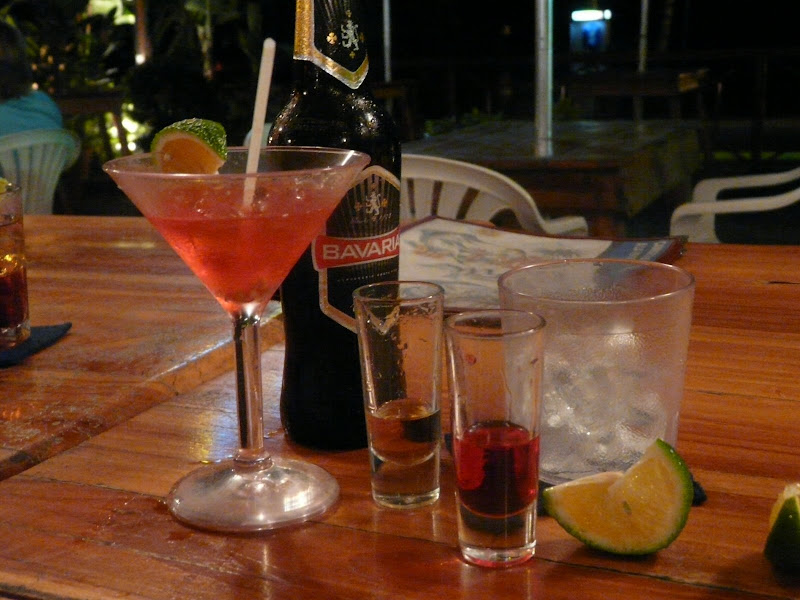
We stopped at the restaurant in the middle of Manuel Antonio, "the Marlin", and parked ourselves for the next few hours. Because of the rain and nightfall, the beach had cleared out, and all that remained were the people fromt the local hotels. And there were not that many people. The waiter there was cool. We got an entire fish for our dinner. It was served with really tasty orange-colored limes. We asked the waiter what these were, and he told us they were lima mandarinas. And since I made such a big thing about how cool they were, he brought out a cocktail glass garnished with slices of them, along with some grenadine. This got me to thinking that there must be cocktail to be had out of all this material, and I ordered a shot of Flor de Cana rum to go with it. And so a new drink was born. And it was good. I will trademark it and become fabulously rich some day. Soon all the chic people will soon be asking for lima mandarinas. Remember, you heard it here first.
After dinner, we took a nighttime walk around Manuel Antonio. We talked to a Rasta dude for a while, he showed us his cool shirt that a friend from Syria had brought him. We walked down the street and saw that every tv was turned on to a football game. The score was 5-0 or something, a real shellacing. We chatted about the game with a guy on the street wearing a Manchester United shirt. He explained it was just an everyday Costa Rican league match.
We walked back to the Marlin for a nightcap. It just so happened that they were getting ready to do their weekly power washing of their tile, so they had this huge compressor that had been hauled into the restaurant since we left. They would turn it on and off randomly, making for such a relaxing ambience! Our friendly waiter was still there, and I told him what I really wanted to try was some guaro, the national drink of Costa Rica. It is made from fermented sugar cane. He told me he had just the thing. A Guaparinha. Oh yeah, these are good, they are the best! If you have had a caipirinha, you know what I am talking about. If you haven't, then it may be hard to explain the beauty of a perfectly balanced mix of lime juice with not-quite-rotgut sugar cane liquor. (I have read that "Guaparinhas" are also called "Caipiticas".)
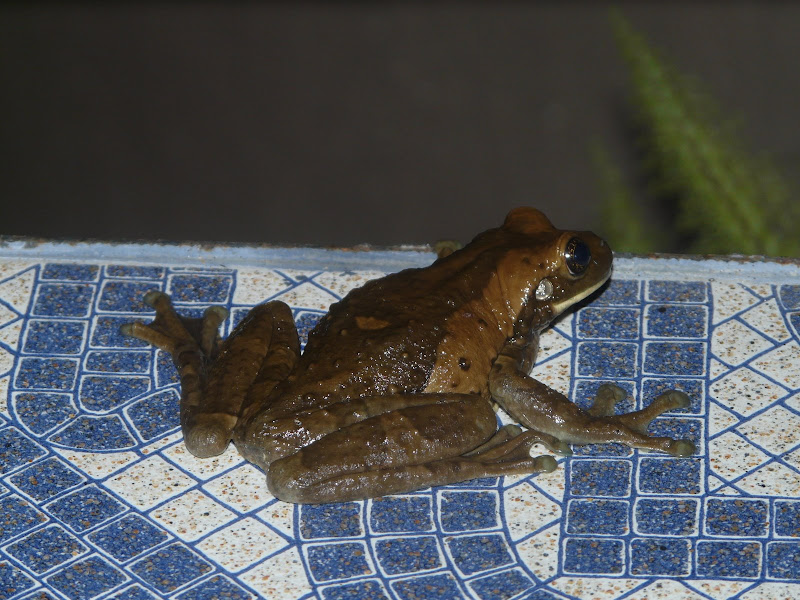
And as we finished our Guaparinhas, the rain started to fall harder than it had fallen all day. Torrents of rain. We could have taken the car, alas, but no. So we trudged through puddles and got drenched through our raincoats. As we climbed the stairs to our room with our soggy feet, we were greeted by one of the soggy-footed locals.
The morning was sunny and beautiful, the flowers around our hotel room were wonderful - the little grandmother raised a lot of orchids and other exotics. We had a leisurely breakfast at nearby hotel's palapa restaurant, and then we walked to the National Park. The man taking the money at the entrance said "hey, remember be". It was the Manchester United guy from the night before.
We hired a guide to give us a tour of the park. It worked out pretty nice for us, because we had a guide just for the two of us, and we saw later that most guides had groups of 5 or more. Our guide had a telescope whose lens matched up nicely with our Canon Powershot camera, and he was able to take pictures for us using our camera and his telescope.
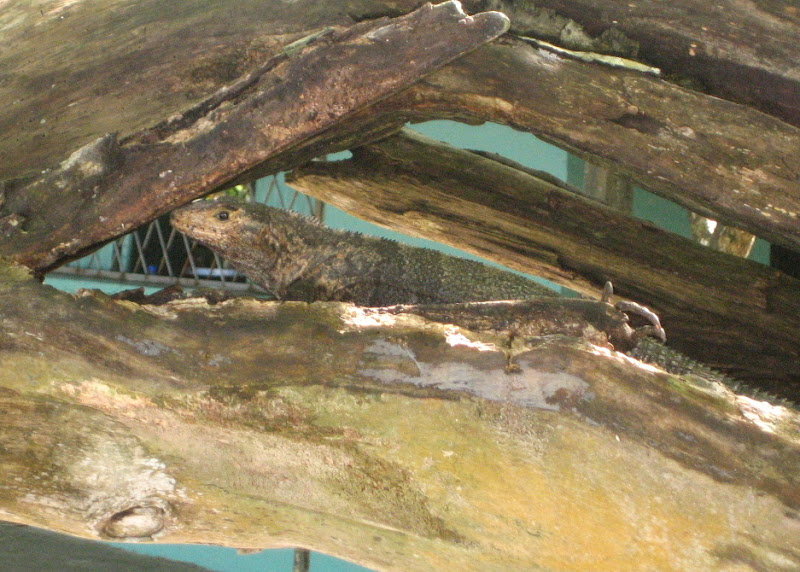
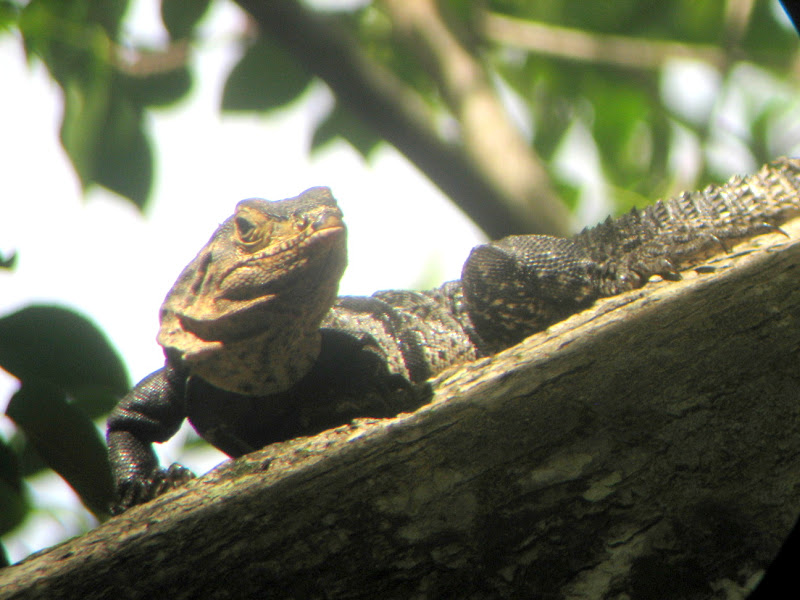
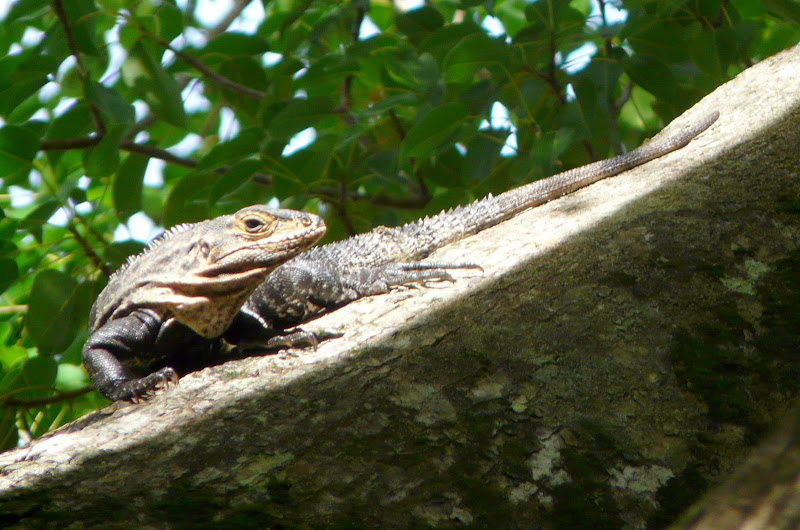
As we entered the park, there were some iguanas taking in the morning sun.
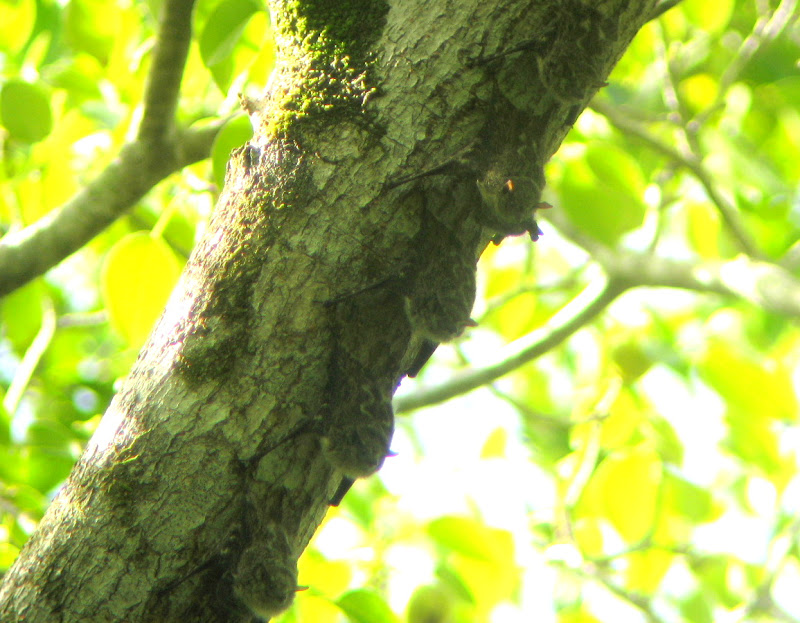
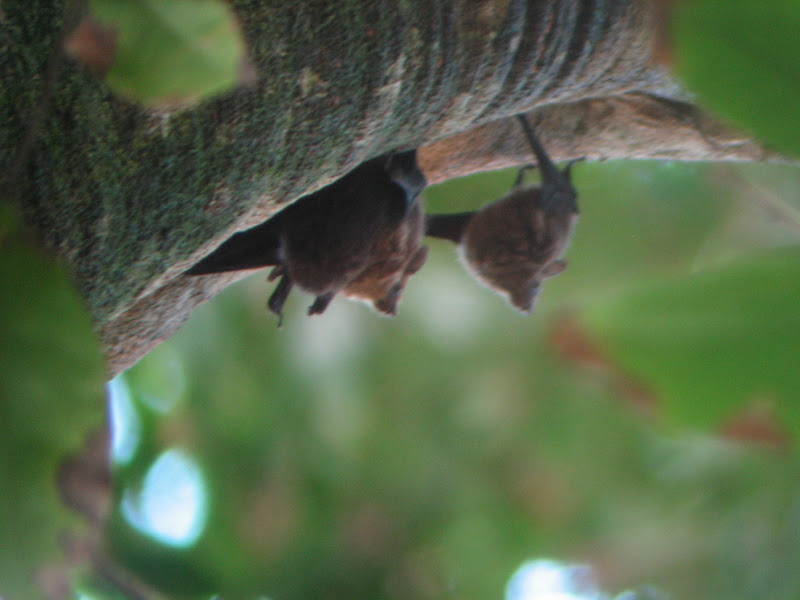
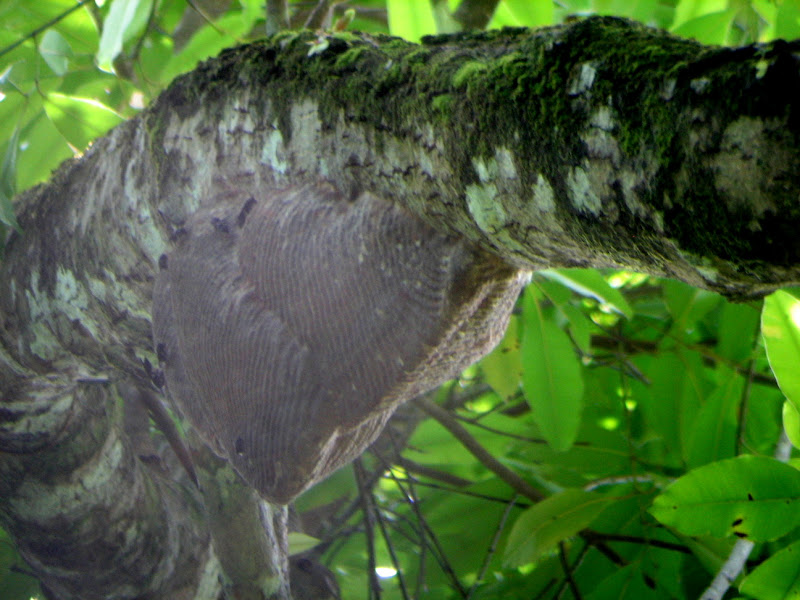
Our guide showed us some nesting bats, and a beehive high in the trees that we would have otherwise missed.
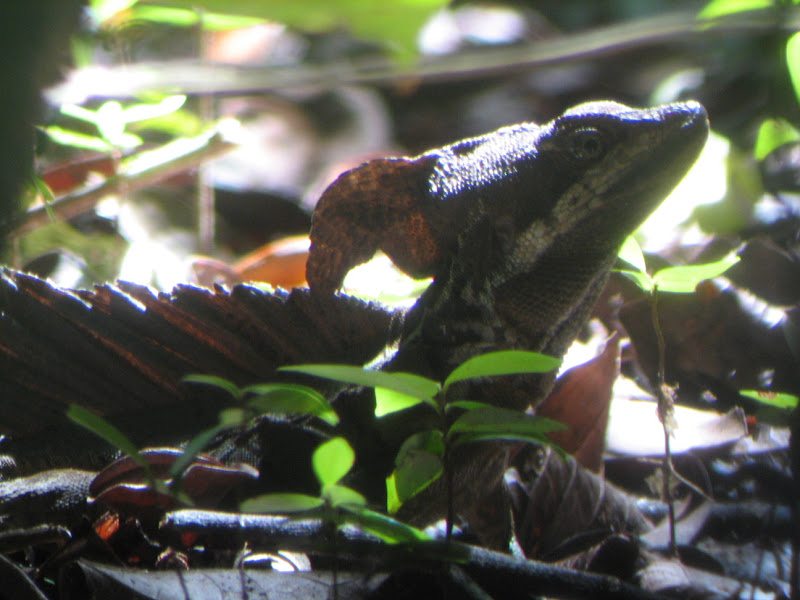
We saw some basilisk lizards. When they run, the stand upright and spread out the arms and feet. I wasn't able to get a picture of one running, but if you want to see one in action you can look at this YouTube.
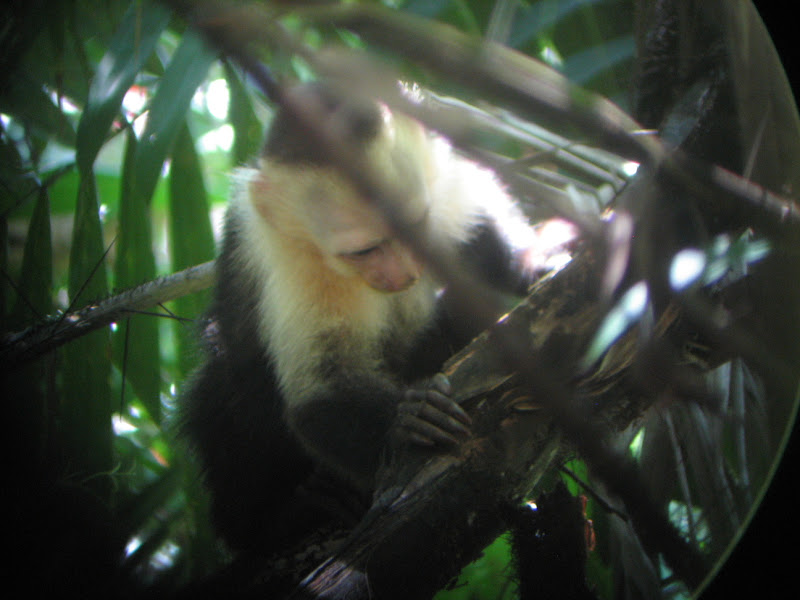
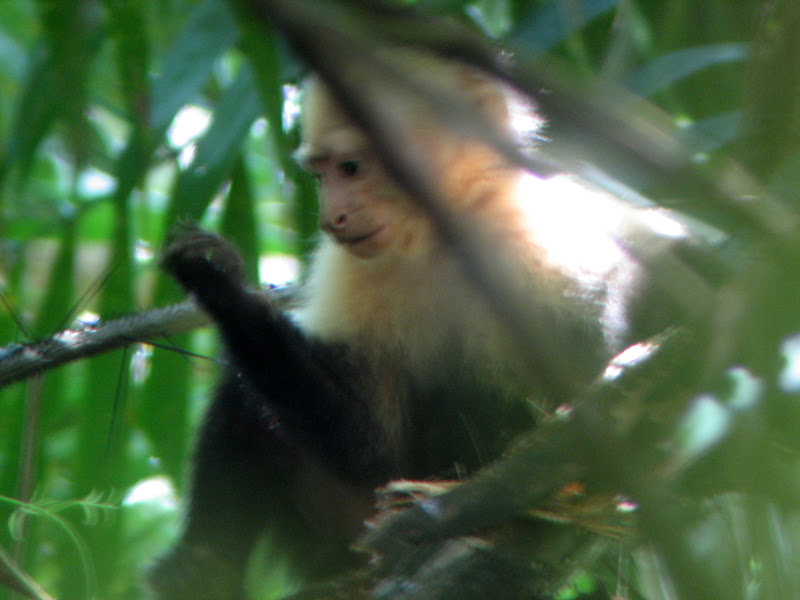
We then came across a group of white faced monkeys.
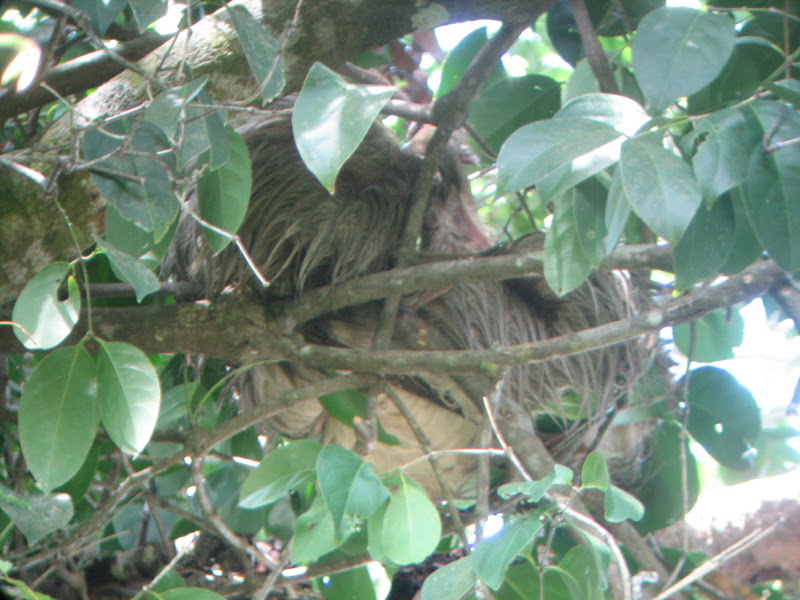
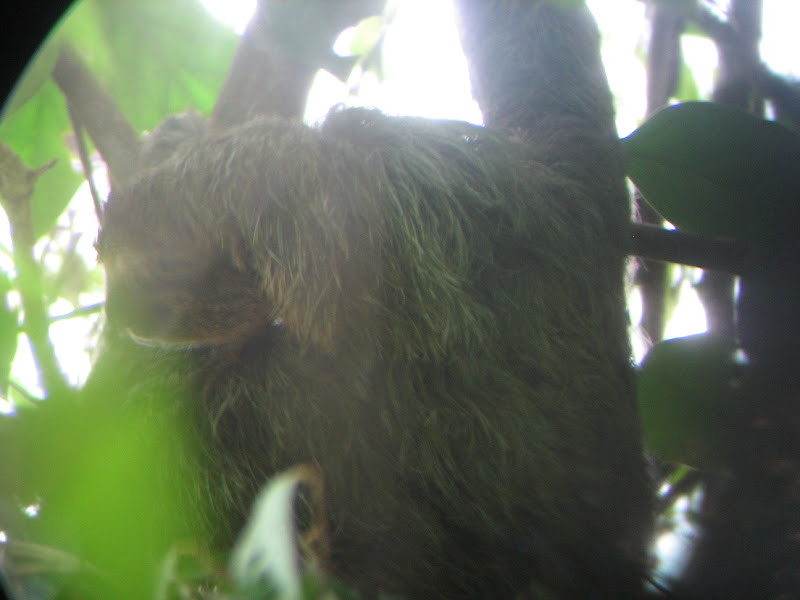
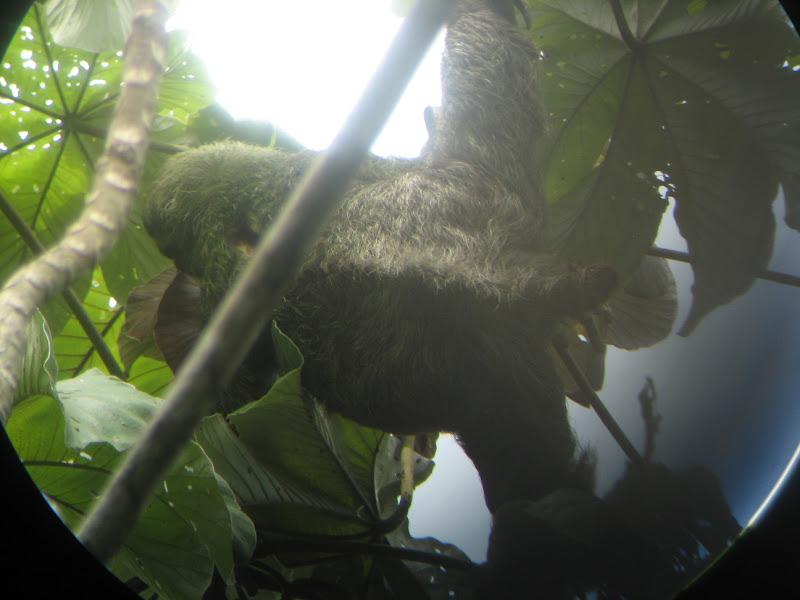
We also saw two-toed sloths sleeping in the tops of the trees. They looked like big dirty mops.
Later we saw a three-toed sloth climbing in a tree.
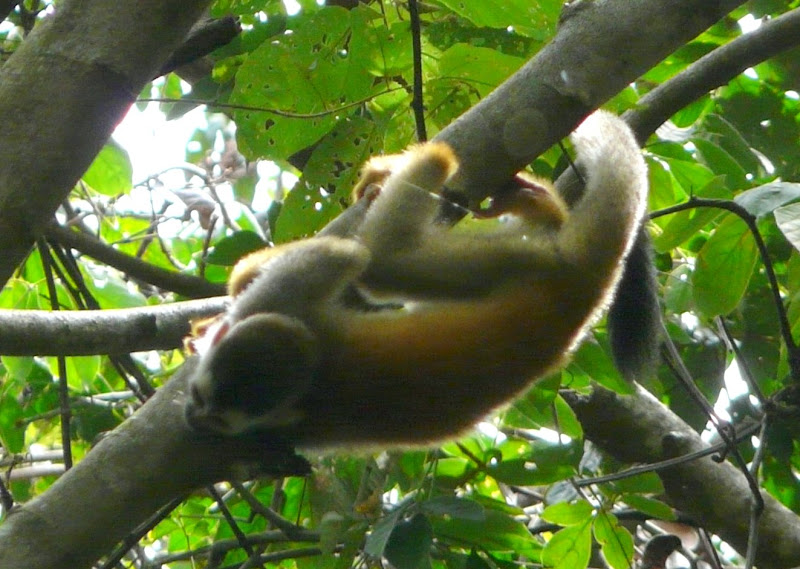
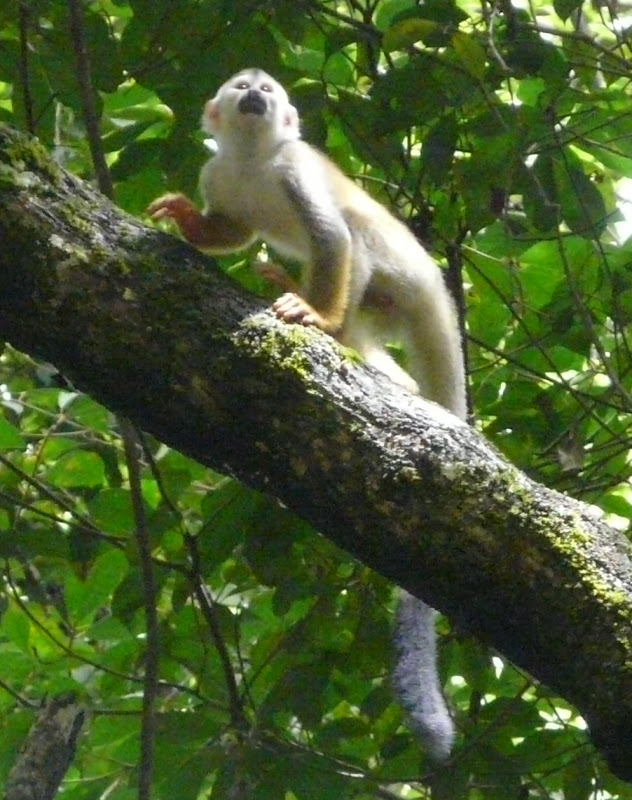
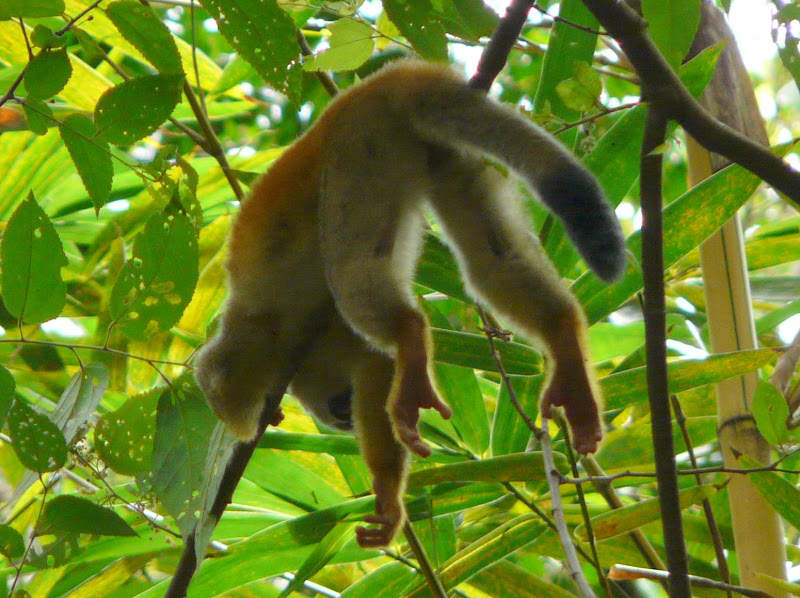
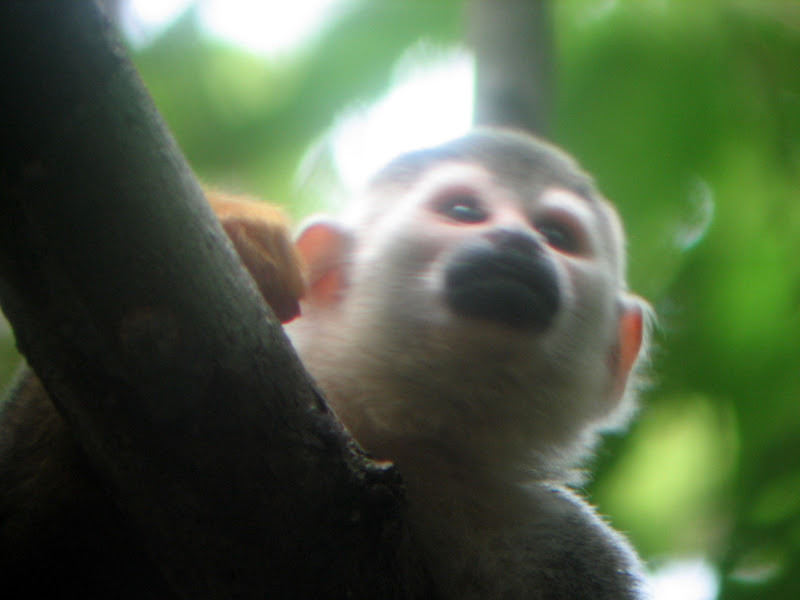
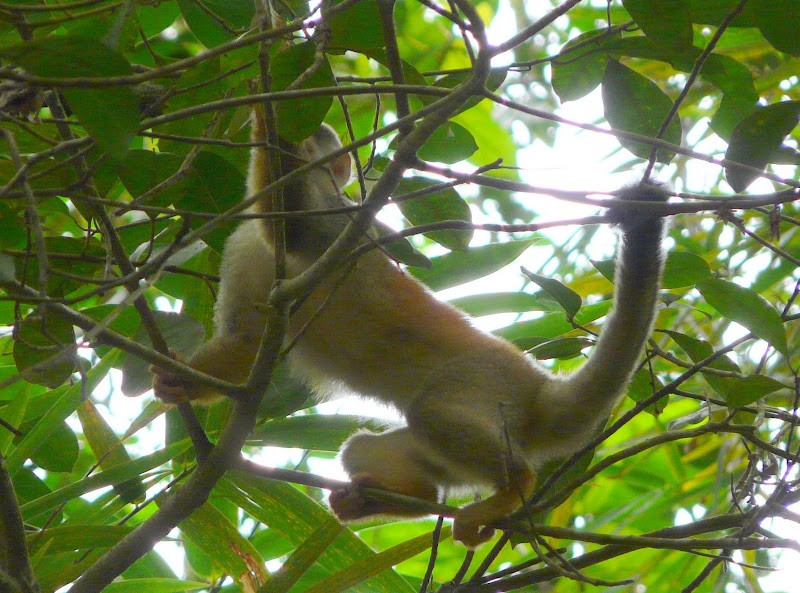
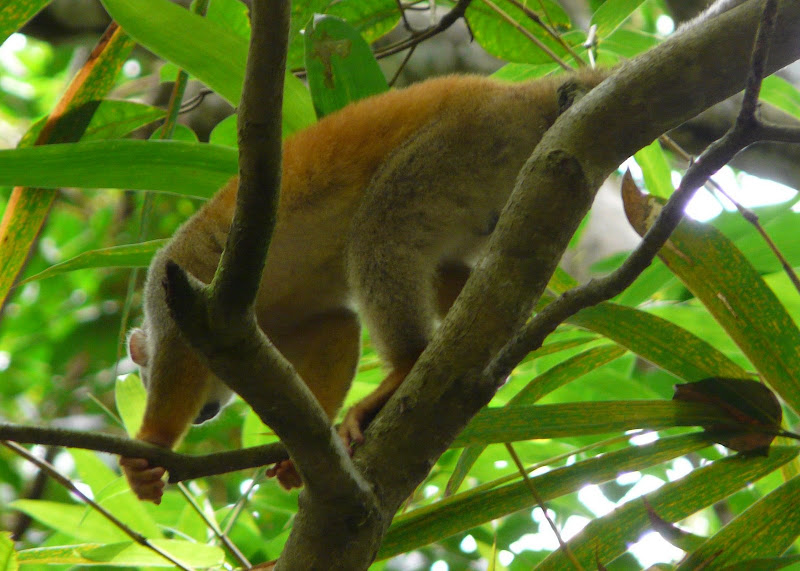
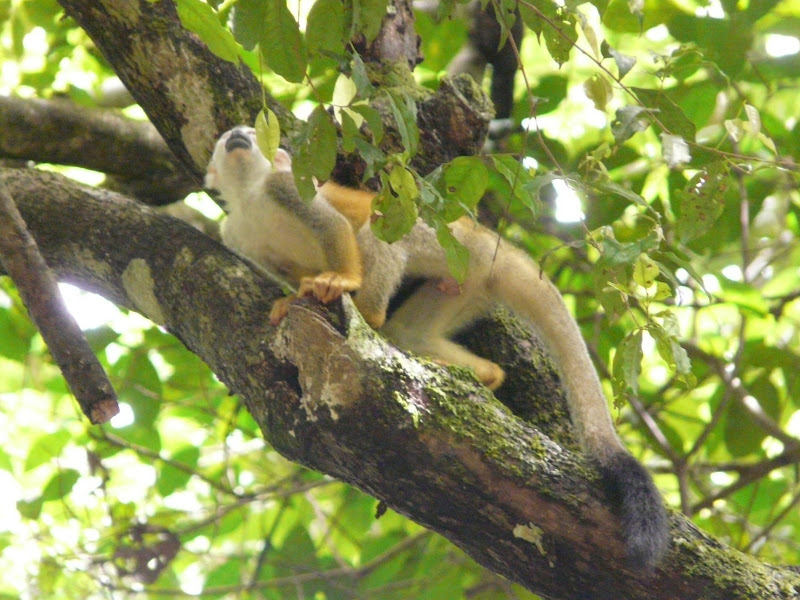
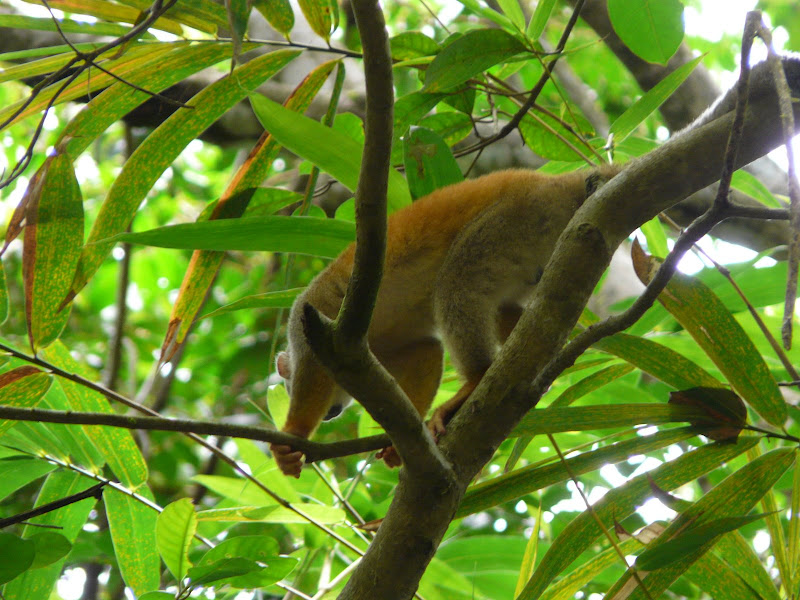
We then came to a group of squirrel monkeys (monos titis) and howler monkeys, who were messing with each other over treetop territory.
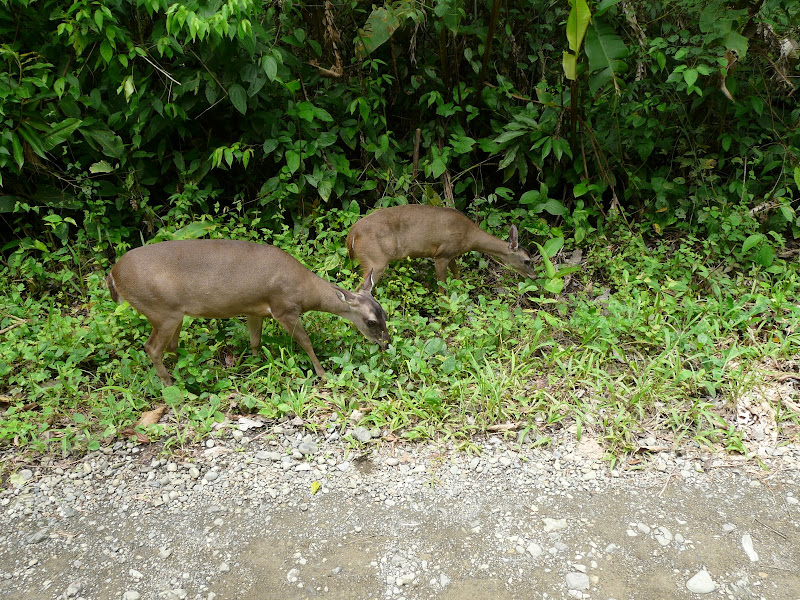
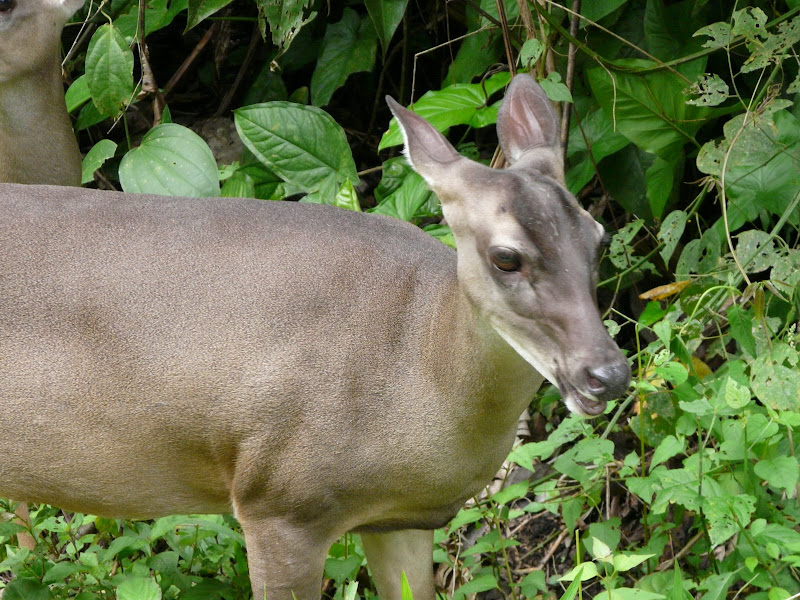
Some whitetail deer were grazing on the edge of the road, oblivious to humans.
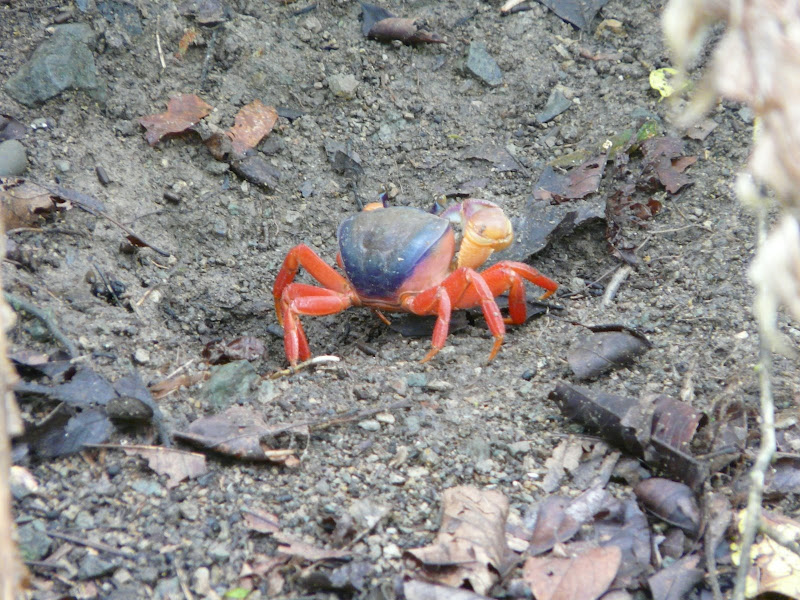
In some parts, the forest floor was covered with hundreds of red crabs.
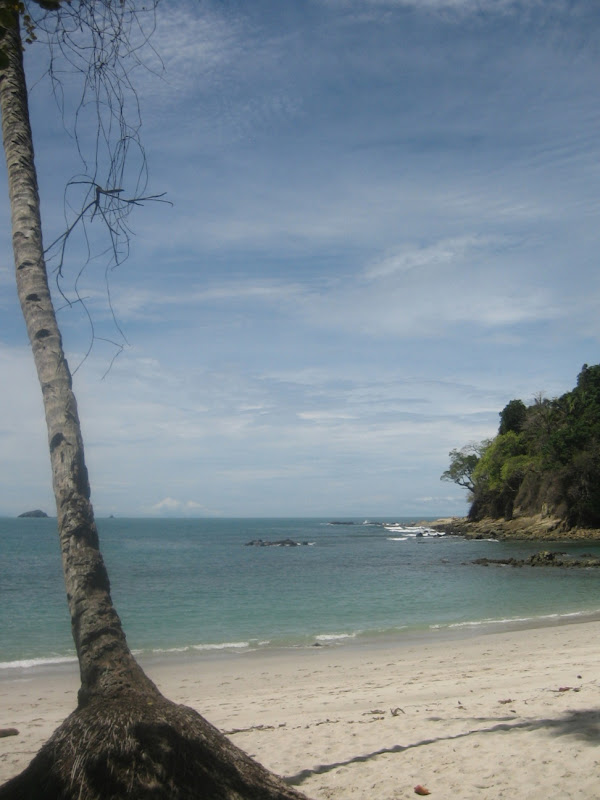
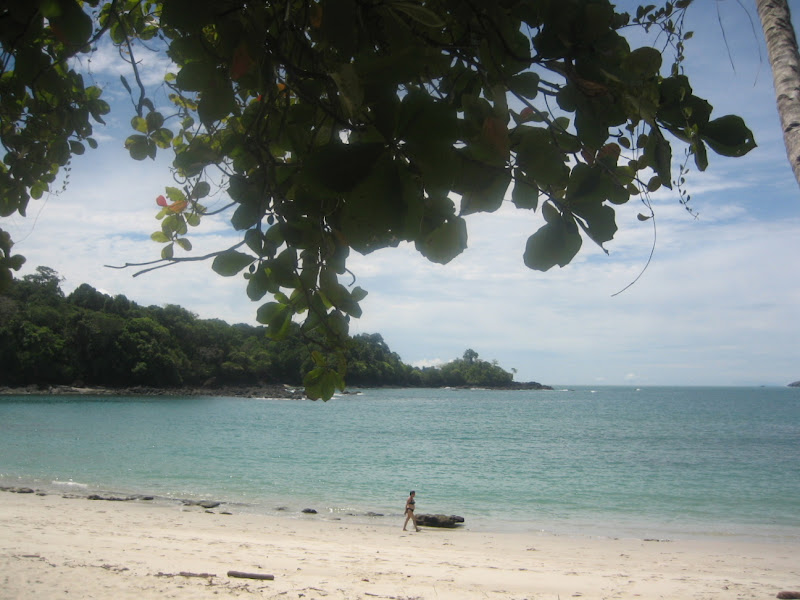
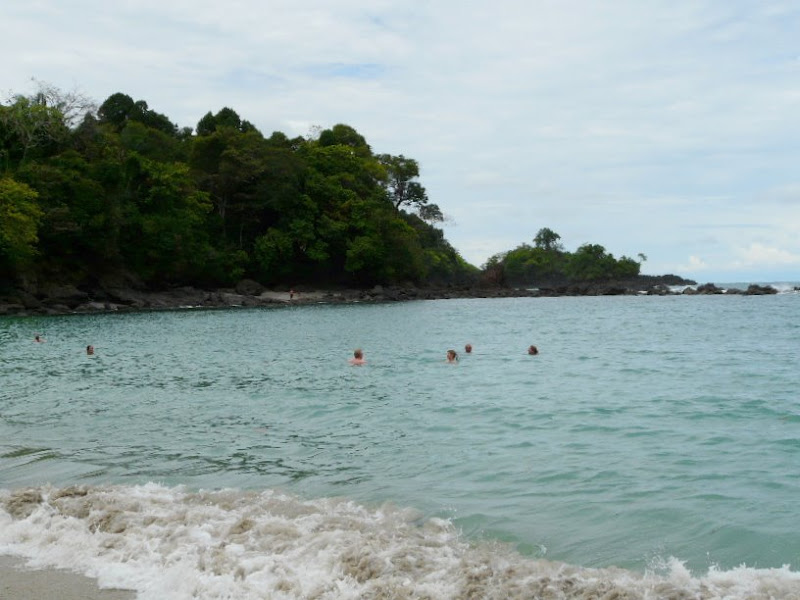
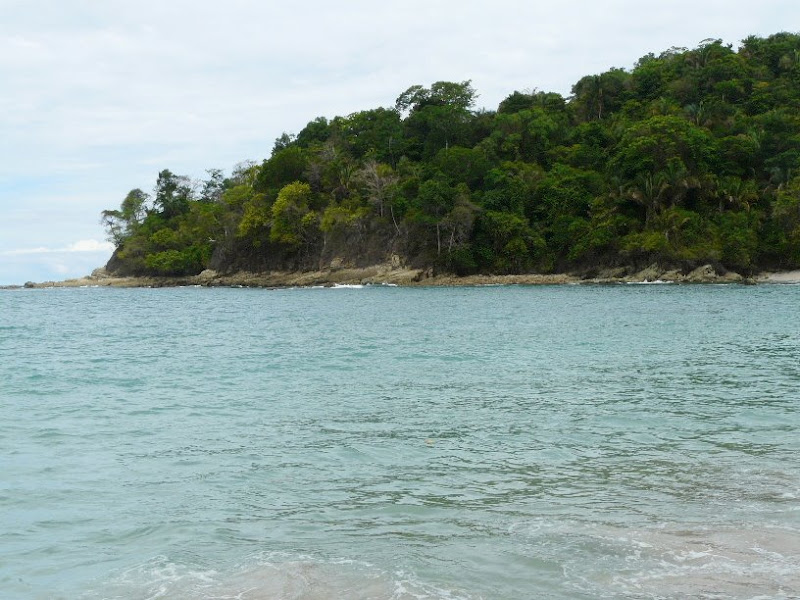
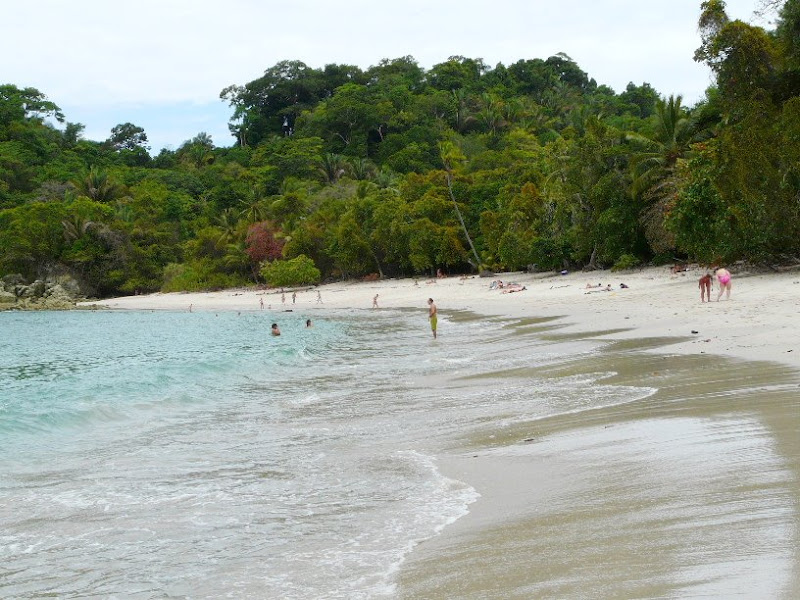
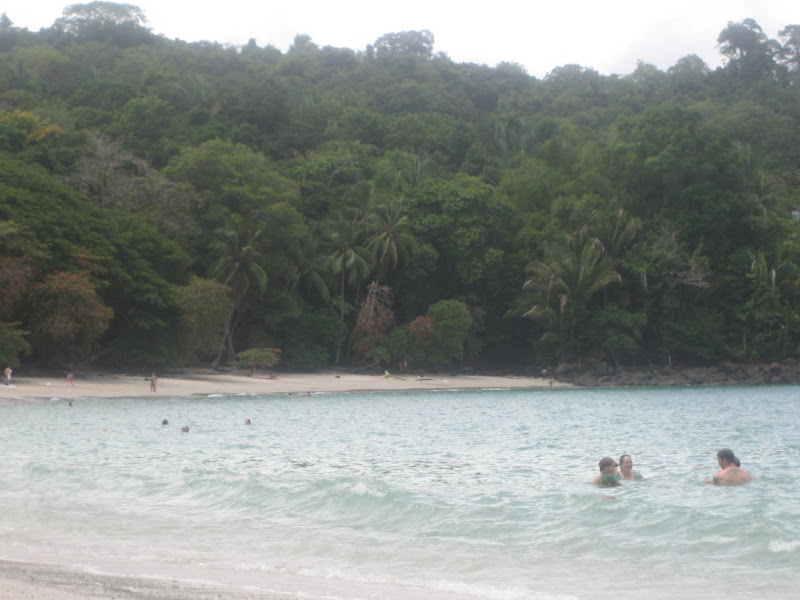
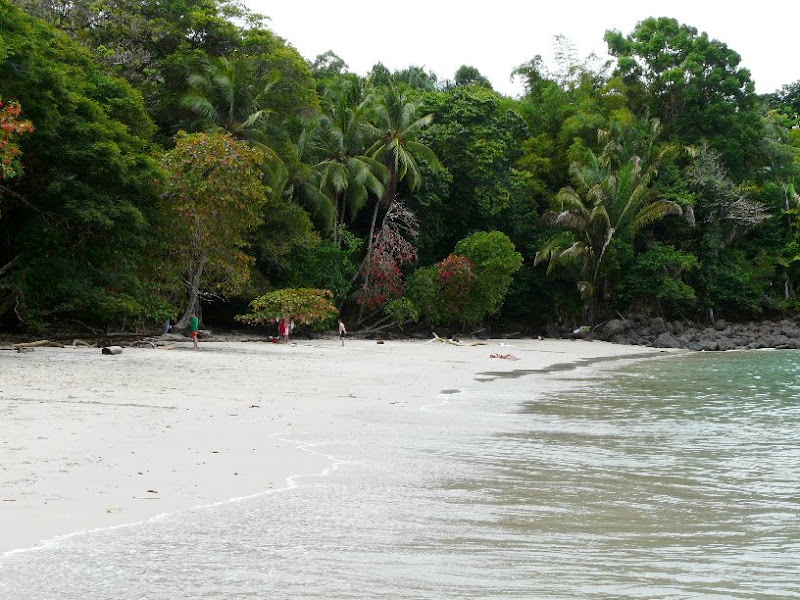
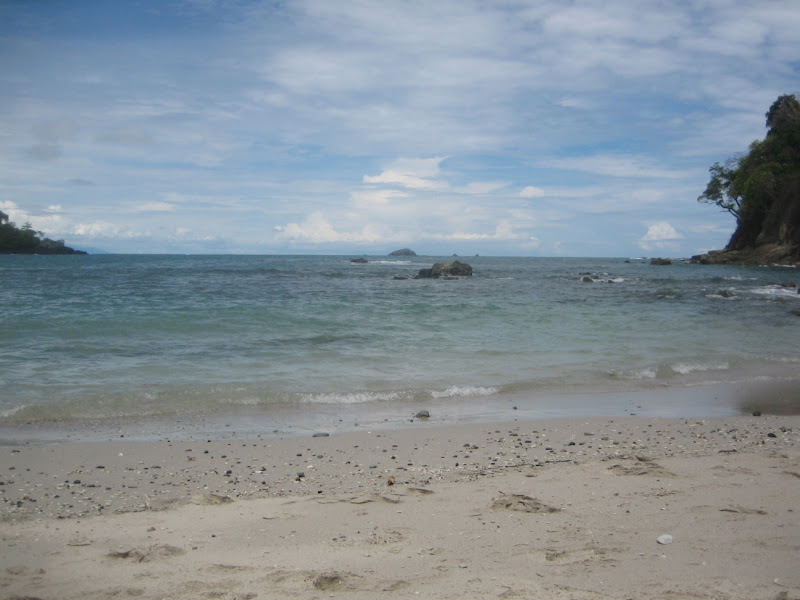
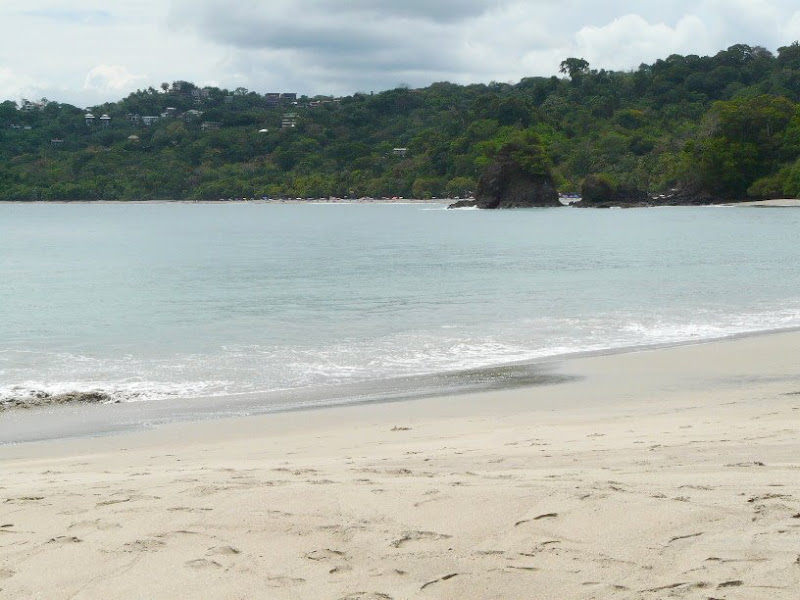
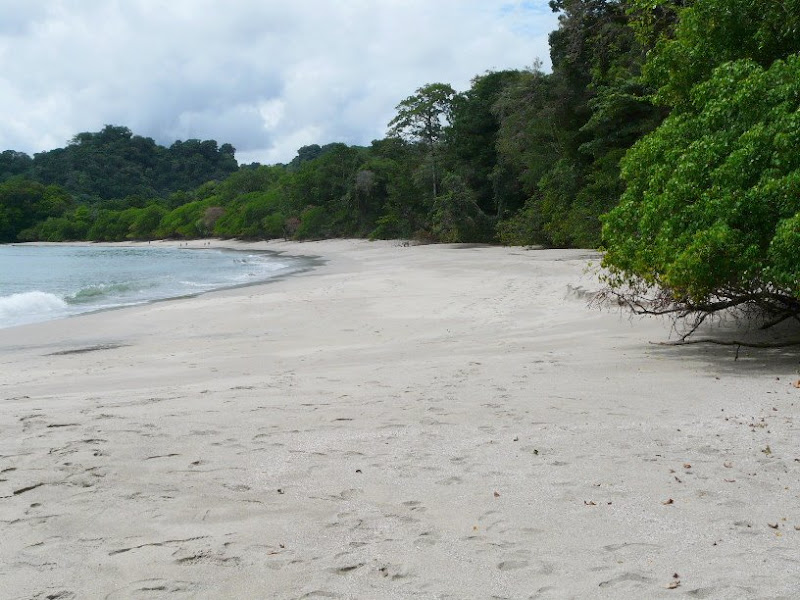
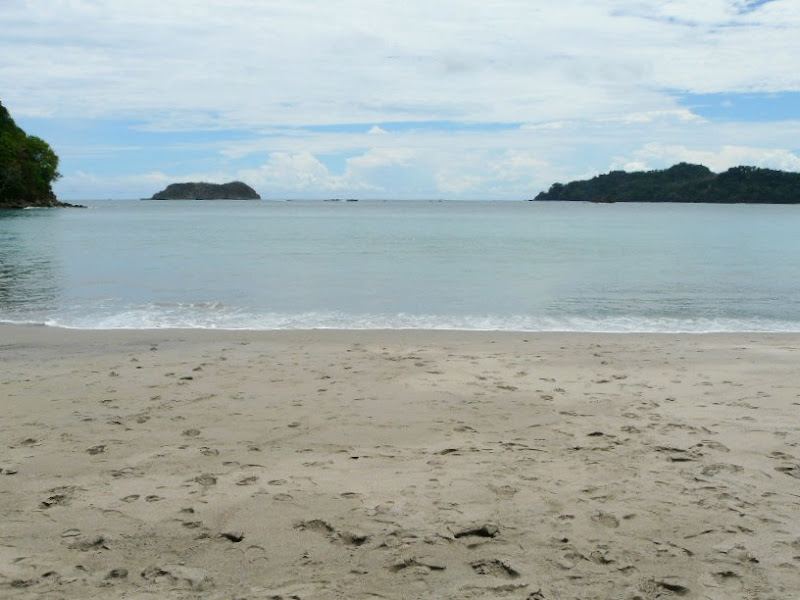
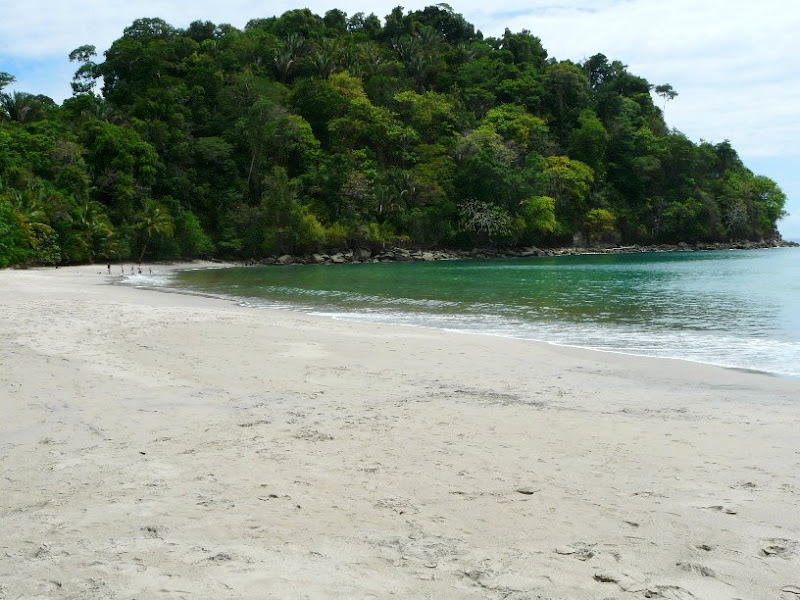
After our nature walk, we went to the beach in the park for swimming and relaxing. The beach was perfect - a small bay with calm water that made swimming easy, and just perfect jungle scenery.
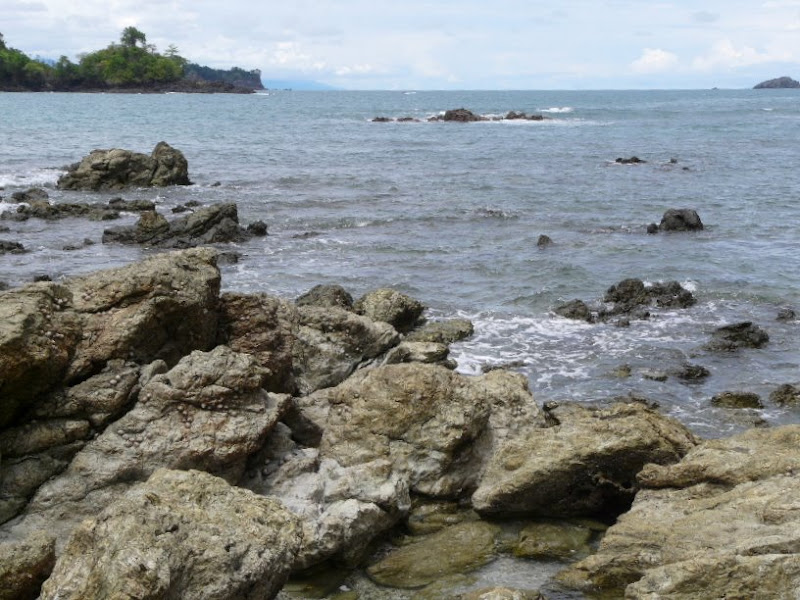
These rocks are believed to have been a pre-historic turtle trap. Turtles would get trapped at low tide back when this worked.
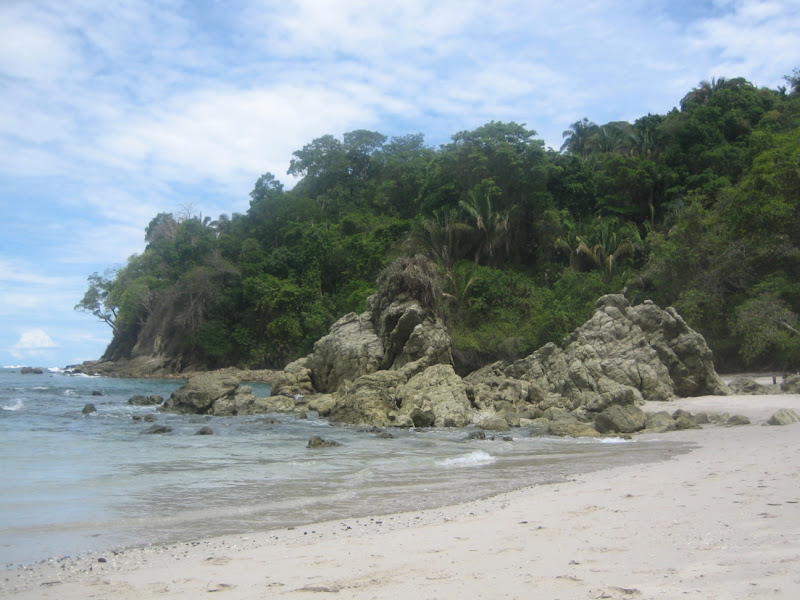
The park also has a beach near the entrance that is just as beautiful, but no one swims there because the other beach is so perfect, while this one has crashing waves and rip tides. If we would have had more time, we could have visited a few more beaches further in the park nicer than these.
After the beach, we decided to visit the tourist shops along the beachfront in the town of Manuel Antonio. I got a t-shirt, Fabienne got a sarong, and we looked at lots of jewelry and handcrafts. We ran into our Rasta friend from the night before, who offered to sell us his cool Syrian shirt.
We ate a nice lunch of grilled chicken and rice in the market, and as it was already 2pm, we needed to hit the road and head for Uvita, about 60 kms (36 miles) south of there. 60 kilometers does not sound like much, until you see this road.
This was the all-time champion of bad roads. Interestingly it was not just bad, it was enormously wide for the first 15 kms or so, easily wide enough for six lanes. But is was nothing but a dirt road that was a sea of ruts with somewhat of driving lane on either edge.
Sometimes only one side of the road would be passable, so you would have to drive on the wrong side of the road for a long stretch, even though there was traffic coming from the other direction. And sometimes, since there was traffic driving the wrong direction coming at you, the easiest thing to do was to drive on their side of the road instead. No rules, whatever works.
This road seemed endless, and just a disaster in a hundred different ways. We didn't stop to take a picture, as I was having too much fun seeing how fast our rental SUV could go over the ruts. There is a YouTube of some of the highway here, though it does not really show the bad part of the road. http://youtube.com/watch?v=zAuUfyVTV_I
The last 10 km of the trip was on a paved highway, what a relief to finally get off that road. It was raininig when we got to Uvita. We drove around the town, trying to figure out where to stay, and finally settled on some cabins in the hills a little south of town.
The rain kept coming down hard that evening, and we drove into Uvita to look for a restaurant for the evening. The number of options seemed pretty limited, and we settled on the restaurant that had the most cars parked in front of it. It was a nice open air place, and they had great seafood. I ordered a guaparinha and all was good. I ordered a second one and was saddened to find that there were no more green limes left. It turns out, green limes are not that popular except for tourist cocktails, since the local lime is the lima mandarina. So that was my last guaparinha. From what we could tell, the restaurant had no name or address either. It's simply the restaurant by the bridge and liquor store on the highway leaving Uvita, who needs to know more?
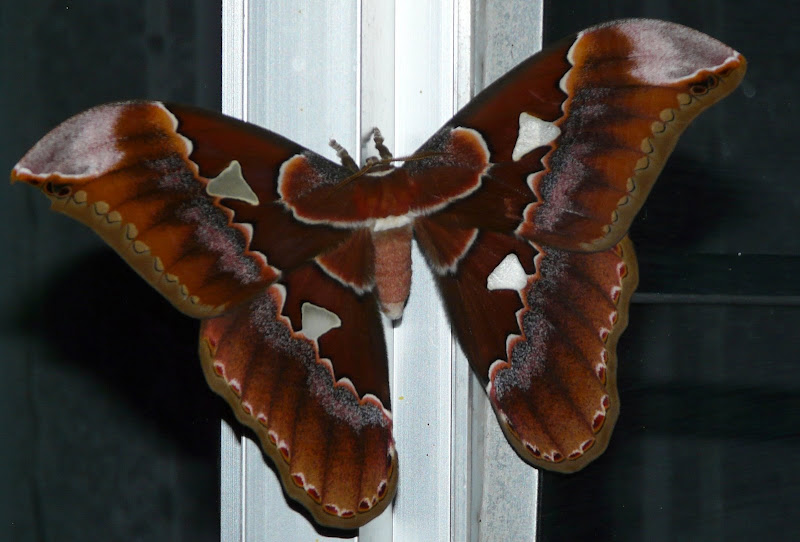
We headed back to our cabin and found a huge moth posed on the window.
We finished the evening sitting on the balcony of our cabin listening to the sounds of the jungle. The jungle was full of the sounds of chimes, like some tibetan bells being played in an odd rhythm. Or like the random pings of hundreds of sonars. I think it must have been the bats. Somehow that species is audible.